
Reykjavik Noir: The Challenge of Turning a Bestseller into a TV Hit
Icelandic writer Lilja Sigurðardóttir has joined forces with prodco Glassriver to turn her trilogy Snare, Trap and Cage into the crime drama series Reykjavik Noir. In this interview with Yako Molhov, she discusses the dual nature of book-to-screen adaptations, and balancing artistic interpretation with the commercial realities of TV shows, and whether the adaptation should exactly mirror the original works.
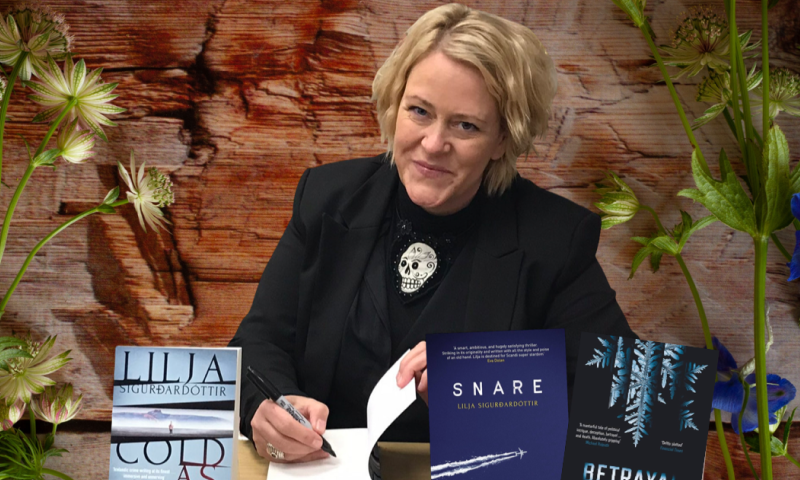
The demand for pre-existing IP has become one of the defining trends in the global television business. From your perspective as an author, why have books and novels become such valuable development assets for producers and broadcasters?
A novel gives a television project a world that has already been built and tested. The characters have relationships and motivations ready, so the screenwriters aren’t starting from a blank sheet of paper. There may also be an existing readership, which gives the project a natural audience from the beginning. As a viewer I am always happy to see that a TV show is based on a novel because then I know it comes with a certain depth. Even when an adaptation changes the plot considerably, it has this reservoir of characters, atmosphere, themes and backstory to draw from.
Do you think having an established literary IP genuinely reduces the commercial risk of a television project, or does a well-known book create equally high expectations among audiences?
Both. An established book can certainly help because there is already awareness of the title and in many cases, there‘s an existing group of readers who are emotionally invested in the story. But those readers of course have expectations as they have built an image of the characters in their mind, imagined the locations and even the way a particular scene feels.
I don’t think an adaptation should try to reproduce the novel exactly, because television is a different form of storytelling. The challenge is to create something that feels recognizably connected to the book while also being confident enough to become its own thing. That is where the excitement lies! A TV series can add something to the story - giving the audience a new experience with the characters they love.
From your perspective how can writers best protect their IP when discussing adaptations for the screen and later once the real production starts?
I think the relationship with the production team is the most important thing. Of course, contracts are important to secure the rights of the author regarding sequels and spin-offs etc. But it is crucial to have people involved who respect the source material and understand what made it work in the first place. At the same time, if an author agrees to an adaptation, they also must accept that collaboration and reinterpretation are part of the process. I experienced this while writing for theater: the real magic that can happen in a collaborative team.
Reykjavik Noir is being developed by Glassriver from your own trilogy, Snare, Trap and Cage. What is it like to see characters and stories that originated in your imagination being reinterpreted for television?
It‘s incredibly exciting. Sonja and Agla have lived in my imagination for such a long time, so the thought of actually seeing them on screen is wonderful. What makes the process particularly interesting is that I’m not doing it alone. I’m writing the television adaptation together with Hrafnkell Stefánsson and Loki Rúnarsson, so the story is already being born again and becoming something new through that collaboration. And we have Glassriver producing, which gives me enormous confidence in the project as they are Iceland´s most prolific producer.
When adapting a novel for the screen, what do you believe is most important to preserve: the plot, the characters, the tone, or the author’s voice?
For me, it is the characters and the emotional core of the story. I know this goes for my readers, and it goes for most television viewers: they come back to series because of the characters. They want to know what happens to these people they have bonded with. Plots can change because television has a completely different rhythm and structure from a novel. But if Sonja no longer feels like Sonja, or the complicated relationship between Sonja and Agla loses its emotional truth, then something fundamental has been lost. If we preserve those things, we can be quite adventurous with the mechanics of the plot.
One of the challenges of adaptation is translating a character’s inner thoughts and narrative voice into a visual medium. How are you approaching that challenge with Reykjavik Noir?
This is the most interesting part of screenwriting for me as I am first and foremost a novel writer. In a novel I can simply enter Sonja’s head and tell the reader what she is afraid of, what she is hiding and what she desperately wants. Television doesn’t give you that luxury. Instead, you have to externalize those things through behavior, dialogue and choices. Sometimes a look between two characters can do the work of several pages of prose. It forces you to find the dramatic version of an internal thought.
How involved have you been in the development of Reykjavik Noir, and where have you found it most valuable to step back and allow the production team to reinterpret your material?
I’ve been very involved because I’m one of the three writers adapting the books, together with Hrafnkell Stefánsson and Loki Rúnarsson. We do the storyline together in a writer’s room and then I will be writing the pilot episode. So, I’m part of that transformation. At the same time, one of the joys of the collaboration is discovering ideas I would never have come up with myself. I already had my chance to tell this story alone when I wrote the novels. Television is collaborative by nature, and I think you must make room for other writers, producers, directors and eventually actors to bring something new to it. I don´t find it threatening, I am just insanely excited about it.
Glassriver has played a key role in bringing Icelandic stories and talent to international audiences. How important is it for smaller territories such as Iceland to have producers willing to take local literary IP into the global market?
It is enormously important. Iceland has a very strong storytelling culture but a very small domestic market, so international partnerships are essential if ambitious projects are going to reach their full potential. I already know this as a novelist. The fact that my books are published all over the world is what enables me to be a full-time writer and a part of what keeps my passion going as it is just magical to connect with readers in faraway countries. Glassriver understands the Icelandic environment and creative community while also thinking internationally.
Looking at the international market, what would you like buyers and platforms to understand about Reykjavik Noir and about the potential of Icelandic literary IP more broadly?
I would like them to see that Snare and the Reykjavik Noir Trilogy is much more than a traditional Nordic crime story. At its heart it is about a woman trapped between motherhood, crime, money and love, trying to find a way out of circumstances that keep closing in around her. Sonja is smuggling cocaine because she is desperate to regain custody of her son, while her relationship with Agla pulls her into another dangerous world. That emotional engine is universal and therefore is a story that can travel extremely well. More broadly, Iceland can offer something distinctive: a rather small and innocent society combined with strange, dramatic and intriguing landscapes.
Are you working on new stories? And now that you have this experience with TV, how does that affect your writing? Do you also write with a perspective to one day put that work on the screen?
I’m always working on new stories, and I have always found myself to be a very visual writer. I see the story in my head just like watching a television show. I spent part of my childhood in Mexico, so I am raised on telenovelas, and television certainly has influenced me in my life. But a novel has extraordinary freedoms that I would never want to give up: you can enter someone’s thoughts, change pace completely or spend time on something that would be difficult to justify on screen. That said I would be thrilled if another of my stories eventually finds its way to the screen
A novel gives a television project a world that has already been built and tested. The characters have relationships and motivations ready, so the screenwriters aren’t starting from a blank sheet of paper. There may also be an existing readership, which gives the project a natural audience from the beginning. As a viewer I am always happy to see that a TV show is based on a novel because then I know it comes with a certain depth. Even when an adaptation changes the plot considerably, it has this reservoir of characters, atmosphere, themes and backstory to draw from.
Do you think having an established literary IP genuinely reduces the commercial risk of a television project, or does a well-known book create equally high expectations among audiences?
Both. An established book can certainly help because there is already awareness of the title and in many cases, there‘s an existing group of readers who are emotionally invested in the story. But those readers of course have expectations as they have built an image of the characters in their mind, imagined the locations and even the way a particular scene feels.
I don’t think an adaptation should try to reproduce the novel exactly, because television is a different form of storytelling. The challenge is to create something that feels recognizably connected to the book while also being confident enough to become its own thing. That is where the excitement lies! A TV series can add something to the story - giving the audience a new experience with the characters they love.
From your perspective how can writers best protect their IP when discussing adaptations for the screen and later once the real production starts?
I think the relationship with the production team is the most important thing. Of course, contracts are important to secure the rights of the author regarding sequels and spin-offs etc. But it is crucial to have people involved who respect the source material and understand what made it work in the first place. At the same time, if an author agrees to an adaptation, they also must accept that collaboration and reinterpretation are part of the process. I experienced this while writing for theater: the real magic that can happen in a collaborative team.
Reykjavik Noir is being developed by Glassriver from your own trilogy, Snare, Trap and Cage. What is it like to see characters and stories that originated in your imagination being reinterpreted for television?
It‘s incredibly exciting. Sonja and Agla have lived in my imagination for such a long time, so the thought of actually seeing them on screen is wonderful. What makes the process particularly interesting is that I’m not doing it alone. I’m writing the television adaptation together with Hrafnkell Stefánsson and Loki Rúnarsson, so the story is already being born again and becoming something new through that collaboration. And we have Glassriver producing, which gives me enormous confidence in the project as they are Iceland´s most prolific producer.
When adapting a novel for the screen, what do you believe is most important to preserve: the plot, the characters, the tone, or the author’s voice?
For me, it is the characters and the emotional core of the story. I know this goes for my readers, and it goes for most television viewers: they come back to series because of the characters. They want to know what happens to these people they have bonded with. Plots can change because television has a completely different rhythm and structure from a novel. But if Sonja no longer feels like Sonja, or the complicated relationship between Sonja and Agla loses its emotional truth, then something fundamental has been lost. If we preserve those things, we can be quite adventurous with the mechanics of the plot.
One of the challenges of adaptation is translating a character’s inner thoughts and narrative voice into a visual medium. How are you approaching that challenge with Reykjavik Noir?
This is the most interesting part of screenwriting for me as I am first and foremost a novel writer. In a novel I can simply enter Sonja’s head and tell the reader what she is afraid of, what she is hiding and what she desperately wants. Television doesn’t give you that luxury. Instead, you have to externalize those things through behavior, dialogue and choices. Sometimes a look between two characters can do the work of several pages of prose. It forces you to find the dramatic version of an internal thought.
How involved have you been in the development of Reykjavik Noir, and where have you found it most valuable to step back and allow the production team to reinterpret your material?
I’ve been very involved because I’m one of the three writers adapting the books, together with Hrafnkell Stefánsson and Loki Rúnarsson. We do the storyline together in a writer’s room and then I will be writing the pilot episode. So, I’m part of that transformation. At the same time, one of the joys of the collaboration is discovering ideas I would never have come up with myself. I already had my chance to tell this story alone when I wrote the novels. Television is collaborative by nature, and I think you must make room for other writers, producers, directors and eventually actors to bring something new to it. I don´t find it threatening, I am just insanely excited about it.
Glassriver has played a key role in bringing Icelandic stories and talent to international audiences. How important is it for smaller territories such as Iceland to have producers willing to take local literary IP into the global market?
It is enormously important. Iceland has a very strong storytelling culture but a very small domestic market, so international partnerships are essential if ambitious projects are going to reach their full potential. I already know this as a novelist. The fact that my books are published all over the world is what enables me to be a full-time writer and a part of what keeps my passion going as it is just magical to connect with readers in faraway countries. Glassriver understands the Icelandic environment and creative community while also thinking internationally.
Looking at the international market, what would you like buyers and platforms to understand about Reykjavik Noir and about the potential of Icelandic literary IP more broadly?
I would like them to see that Snare and the Reykjavik Noir Trilogy is much more than a traditional Nordic crime story. At its heart it is about a woman trapped between motherhood, crime, money and love, trying to find a way out of circumstances that keep closing in around her. Sonja is smuggling cocaine because she is desperate to regain custody of her son, while her relationship with Agla pulls her into another dangerous world. That emotional engine is universal and therefore is a story that can travel extremely well. More broadly, Iceland can offer something distinctive: a rather small and innocent society combined with strange, dramatic and intriguing landscapes.
Are you working on new stories? And now that you have this experience with TV, how does that affect your writing? Do you also write with a perspective to one day put that work on the screen?
I’m always working on new stories, and I have always found myself to be a very visual writer. I see the story in my head just like watching a television show. I spent part of my childhood in Mexico, so I am raised on telenovelas, and television certainly has influenced me in my life. But a novel has extraordinary freedoms that I would never want to give up: you can enter someone’s thoughts, change pace completely or spend time on something that would be difficult to justify on screen. That said I would be thrilled if another of my stories eventually finds its way to the screen