

Regional Streaming Platforms Find Their Own Path to Scale
For years, the story of streaming was written primarily by Netflix, Disney+, Prime Video, and a handful of other global platforms. Their main ambition was clear: to build the largest possible subscriber base across as many territories as possible and spread content investment over global infrastructure.
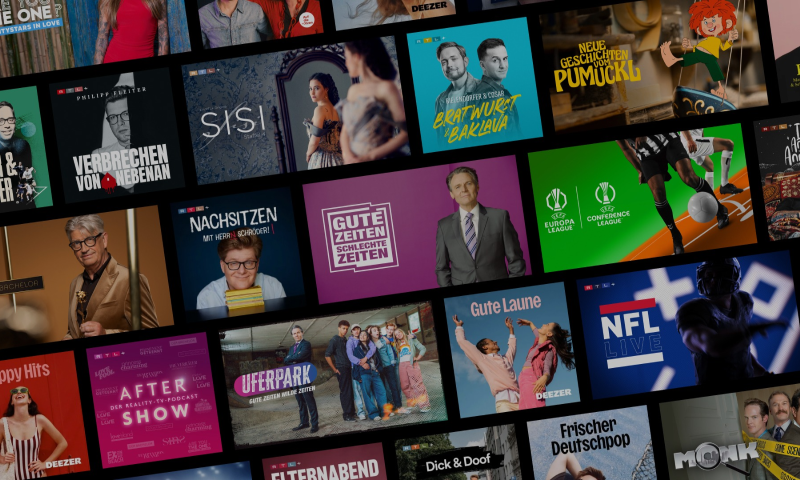
For a long time, people spoke of “streaming wars,” but there is hardly a consensus on whether there was ever a true winner or whether these wars are now over. As the streaming market enters a more mature phase, another group of players is emerging ever more clearly: regional platforms that know their markets better than global competitors ever could. From Voyo and Oneplay in Central and Eastern Europe to MBC SHAHID in the Middle East, Globoplay in Brazil, RTL+ and Joyn in Germany, Crave in Canada, Stan in Australia, and TVING, Wavve, and Coupang Play in South Korea, successful local and regional streaming platforms show that scale does not necessarily mean hundreds of millions of subscribers.
In many markets, the winning formula is a combination of local originals, live TV, sports, strong television brands, advertising, and well-designed bundled offers. What’s more, some of these platforms are increasingly creating content that reaches far beyond the borders of their home markets.
Bell’s Canadian Crave is one of the clearest recent examples. The success of Heated Rivalry helped drive a 26% year-over-year increase in total subscriptions to 4.6 million at the end of 2025, while direct-to-consumer streaming subscriptions grew by 65%. In the second quarter of 2026, Crave’s total subscriptions reached 5.07 million, representing a 23% year-over-year growth. Bell stated that the quarter was the most-watched in Crave’s history. Heated Rivalry also became an unusually strong international breakout for a Canadian production. The series was produced for Crave before being licensed to international markets, showing how a regional platform can leverage local production funding and a relatively focused market strategy to create content with global potential. Crave subsequently used this success to position Canadian stories as a source of international IP, rather than just content to satisfy domestic programming requirements. For the international content business, the success of regional streaming platforms is becoming one of the most important trends to watch at MIPCOM 2026.
Czechia: From Voyo to Oneplay
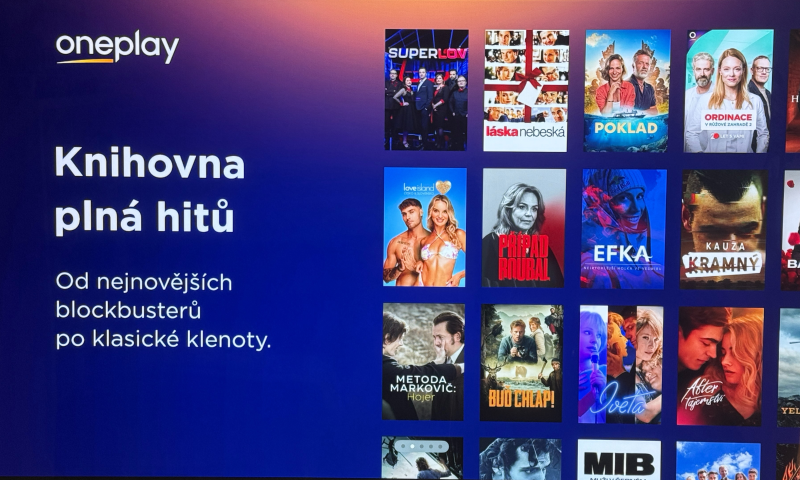
Central and Eastern Europe offers one of the clearest examples of how a streaming service built around a broadcaster can transform into a much broader entertainment proposition. CME’s Voyo had already become one of the strongest local streaming services in the region, reaching 950.000 paid subscribers in Czechia and Slovakia at the end of 2024, while its total subscriber base across CME markets approached 1.4 million. Voyo was among the top three SVOD services in most of its markets and the 1 local service in several of them.
However, CME decided that the next phase required something bigger than a standalone SVOD service. In March 2025, Voyo and O2 TV were replaced in Czechia by Oneplay, which combines streaming and traditional pay-TV into a single offering. The platform brings together live TV channels, Czech and international entertainment content, movies, kids programming, documentaries, and, crucial to its strategy, sports.
The strategy appears to be working. After its first year, Oneplay reported nearly three billion video views and 1.6 billion hours of viewing time. In April, Didier Stoessel, co-CEO of PPF Group (which owns CME), stated that Oneplay had taken a leading position in the Czech market, estimating the platform to be approximately 1.5 times larger than Netflix locally, four to five times larger than Disney+, and three to four times larger than HBO Max. The significance of this development goes beyond the numbers themselves. Oneplay effectively converts a traditional pay-TV relationship into a streaming relationship without requiring consumers to abandon the TV offering they already know. This hybrid model could prove particularly important in markets where pay-TV penetration remains significant and consumers are unwilling to maintain multiple standalone streaming subscriptions.
Poland Shows the Power of the Local Ecosystem
Poland is an equally interesting market because it demonstrates that several local platforms can coexist alongside global giants. Netflix remains the market leader, but Mediapanel data for August 2026 shows significant audiences for local services. Canal+ reached 2.83 million users, TVP reached 1.99 million, Player reached 1.69 million, and Polsat Box Go reached 1.41 million during the month. Player’s audience grew by 9% compared to the previous month, while Polsat Box Go increased its audience by nearly 10%.
According to Mediapanel data for May 2026, Netflix accounted for 39.8% of total time spent on video streaming platforms across PCs, smartphones, and tablets. Although the service remains the undisputed market leader, the metric highlights a significant shift in viewing habits as local and regional platforms continue to attract audiences and grow engagement. Netflix reached 9.58 million users during the month, up 4.3% compared to April. However, average viewing time per user decreased by more than seven minutes to 5 hours and 47 minutes, limiting the platform’s ability to regain the market share it once held. The May result followed a 39.37% share in April and represented the second consecutive month in which Netflix failed to cross the 40% threshold.
The strongest growth came from local services. Canal+ recorded one of the market’s largest gains, increasing its share by 1.13 percentage points to 6.76%. The platform benefited from both a larger audience and longer viewing sessions, showing that local content and sports offerings continue to draw Polish viewers. Polsat Box Go also strengthened its position, increasing its share from 4.55% to 5.14%, while Pilot WP reached 3.2%. The performance of these services underscores the growing competitiveness of the Polish streaming market, where local and regional operators increasingly compete with international platforms.
The numbers are particularly revealing because they represent real digital reach rather than the much smaller subscriber bases that platforms typically disclose publicly. Thus, the hierarchy of the streaming market in Poland appears far more fragmented than a simple “Netflix vs. Everyone Else” narrative suggests. Player has the massive advantage of TVN’s local production engine behind it, while Polsat Box Go can rely on Polsat’s TV channels, sports rights, and entertainment portfolio.
Canal+ combines premium international content with an increasingly significant Polish production arm. Polsat has also aggressively targeted aggregation. In March 2026, it expanded its Plus and Polsat Box offerings to include Amazon Prime and Apple TV alongside Disney+, HBO Max, and SkyShowtime, turning its telecom and pay-TV infrastructure into an aggregator of global streaming services. This could prove just as important as the platforms themselves: regional operators can become the gateway through which consumers access both local and international content.
MBC SHAHID: A Regional Platform with Real Scale
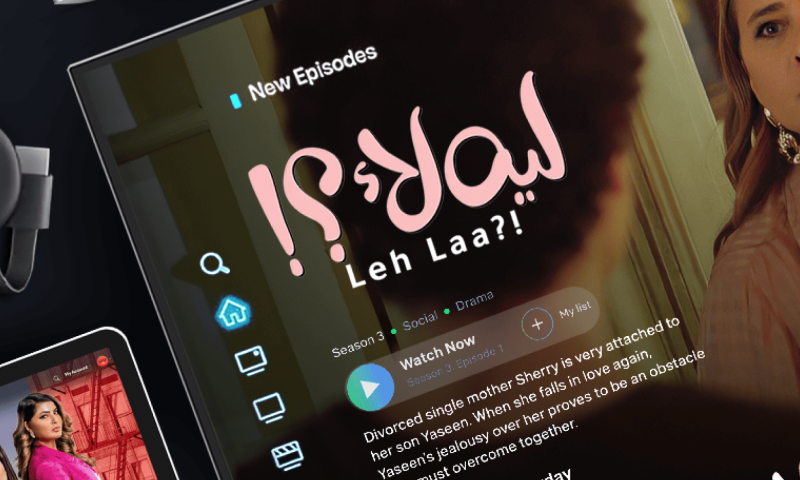
If there is one regional streaming platform that most clearly demonstrates the potential of local content outside Europe, it is MBC SHAHID. The Middle Eastern platform is no longer just an online extension of the MBC GROUP’s broadcasting business. It has developed into a major standalone streaming business serving audiences across the MENA region with a growing international footprint.
Its recent financial results are particularly telling. In the first half of 2026, MBC SHAHID generated revenues of 825.5 million Saudi riyals, representing an 18.5% year-over-year increase. Subscription revenues grew by 23.3% to 666.4 million riyals, while the platform recorded a net profit of 54.2 million riyals, compared to 2.7 million riyals in the first half of 2025. The company expects SHAHID to achieve full-year profitability in 2026. The platform is also becoming increasingly international. Revenue from international subscribers grew by 12% year-over-year, with the United States remaining its largest international market.
Meanwhile, a partnership with Ooredoo in Tunisia helped triple SHAHID’s subscriber base in that market. Content strategy sits at the core of this growth. MBC SHAHID released six original productions in the first half of 2026, with Hofrat Jahannam, the second season of Forsan Greih, and Mercato each attracting over one million viewers. Around nine more original productions are planned for the second half of the year. Perhaps most importantly, SHAHID shows that a regional service does not have to choose between a subscription and an ad-supported model. It is building both SVOD and AVOD businesses simultaneously, with subscription revenue now serving as the main driver while advertising remains an important secondary source. This combination is becoming increasingly attractive as the streaming economy matures.
Globoplay: Brazil’s Local Streaming Powerhouse
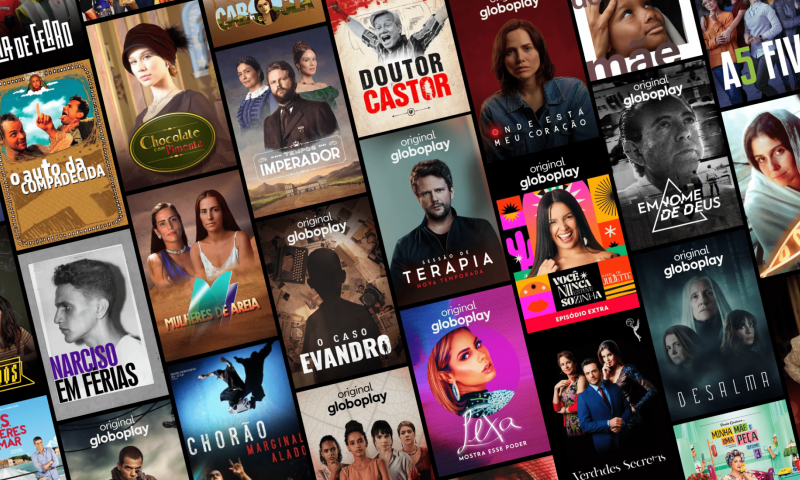
Brazil offers another compelling example of a broadcaster turning its local content advantage into a powerful streaming business. Globo’s Globoplay evolved from a catch-up service into one of the most important local streaming platforms in Latin America, combining Globo’s massive television ecosystem with original productions, live channels, sports, news, international content, and a vast archive of Brazilian productions. Globoplay can leverage the reach of Globo’s free-to-air network to launch and promote streaming titles, while successful TV productions can be extended into the digital space through exclusive streaming content. The platform is also increasingly using international content as part of its offering, while Globo’s own productions serve as key export assets. Brazilian telenovelas and series continue to travel across Latin America and other international markets, giving Globoplay a role not only as a domestic streaming platform, but also as part of Globo’s broader content business.
Globoplay demonstrates that a broadcaster does not necessarily have to abandon its traditional TV ecosystem to build a successful streaming business. On the contrary, the two can reinforce each other. Brazil is also a reminder that the opportunity for regional streaming platforms is not limited to relatively small markets. With a population of over 200 million and a massive domestic TV industry, Brazil offers sufficient scale for a locally focused platform to build a significant business while creating content with international potential. In this sense, Globoplay sits somewhere between the European broadcaster-led streaming model and the much larger Asian streaming ecosystems. Its competitive advantage is not just the size of its subscriber base, but access to one of the strongest production engines for local content in Latin America. This makes Globo particularly important for the international content business: the company is simultaneously a broadcaster, a streaming platform, a producer, a rights holder, and an exporter of Brazilian IP.
South Korea: Local Streaming Platforms Become a Powerful Counterweight
South Korea offers the strongest Asian example of a mature local streaming ecosystem competing directly with global platforms. Netflix remains the country’s largest streaming service by a number of metrics. In December 2025, it registered 15.16 million daily active users in South Korea, according to Wiseapp Retail.
However, data also highlights the scale of local competitors: Coupang Play had 8.53 million daily active users, TVING had 5.25 million, and Wavve had 2.35 million. The subscription picture is equally revealing. According to market analysis, TVING held about 23% of SVOD subscriptions in South Korea in 2026, compared to 12.7% for Wavve, while Coupang Play has built a significant position thanks to its integration with the broader Coupang ecosystem and an aggressive sports strategy. TVING is noteworthy because it combines the content engines of CJ ENM and other Korean broadcasters with original productions, entertainment content, and sports. Wavve has a different offering built around the country’s terrestrial broadcasters. Coupang Play demonstrates how streaming can be embedded into a broader consumer ecosystem rather than existing solely as a standalone entertainment subscription. The result is a market where local services do not simply offer a Korean alternative to Netflix. They are becoming powerful businesses in their own right, with distinct content and distribution strategies. Korea also illustrates another increasingly important trend: local streaming platforms can simultaneously serve as domestic services and exporters of culture. The same Korean dramas, entertainment formats, and sports programs that strengthen the domestic offer can become valuable assets for international licensing.
China: Scale Without the Hollywood Model
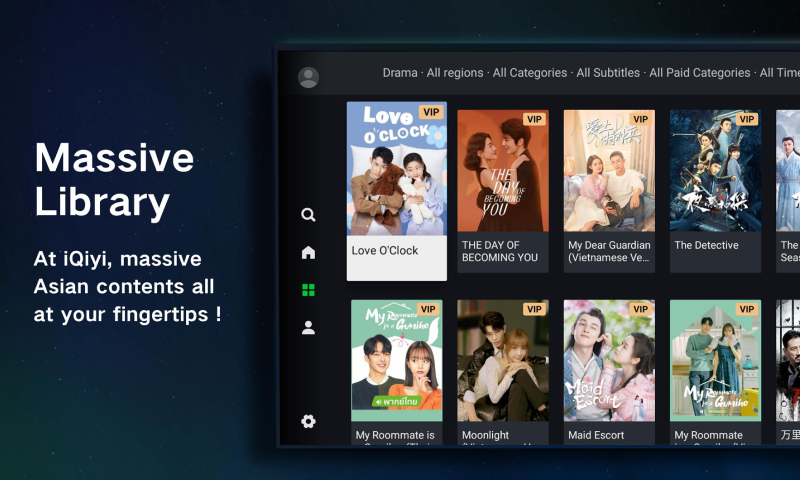
Unlike most markets where global platforms compete with a handful of local services, China’s long-form streaming market is dominated by domestic platforms such as Tencent Video, iQIYI, and Youku, with Mango TV and Bilibili also playing major roles, creating a highly specific regional streaming ecosystem. Tencent Video alone reported 114 million video subscribers in the second quarter of 2025, maintaining its leading position in the Chinese long-form video market. iQIYI remains another major player. The company generated revenues of 27.29 billion yuan in 2025 and continues to build its business around subscriptions, advertising, and content distribution. In the first half of 2026, iQIYI stated that it was behind 10 of the 16 newly released long-form dramas rated S+ by Enlightent, with three of its titles exceeding a popularity index of 10,000.
The Chinese market is particularly significant because it shows that regional streaming does not necessarily have to be built around a traditional broadcaster. These are tech and entertainment ecosystems with vast domestic audiences, sophisticated ad businesses, subscription models, massive IP catalogs, and growing international ambitions. The scale is also fundamentally different. Industry data for the second half of 2025 indicates that Tencent Video and iQIYI had approximately 35 million and 32.5 million monthly active users respectively, while Youku had around 17.4 million, though methodologies vary across different platforms and sources. China therefore presents a different version of the regional streaming thesis: local services can achieve massive scale without becoming global platforms on the Netflix model. Their competitive advantage comes from deep knowledge of a huge domestic market, control over local IP ecosystems, and the increasingly active export of selected content to international markets. For the international content business, this makes China both a massive market and an increasingly vital source of formats, dramas, and IP.
Germany: Local Platforms Become Serious Contenders
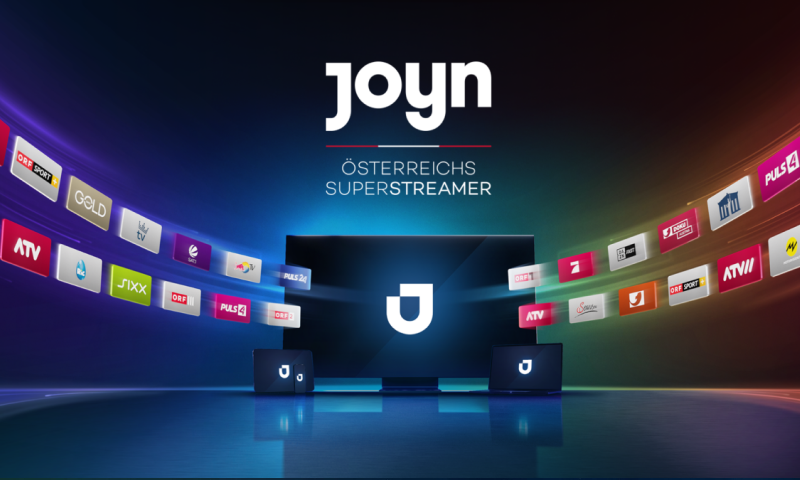
Germany provides another strong example of a broadcaster-backed streaming service reaching significant scale. RTL+ surpassed the seven million paid subscriber mark around the turn of the year and averaged over 10 million monthly users in 2025. At the end of March 2026, paid subscriptions in Germany reached 7.3 million, representing a 16.1% year-over-year growth, while viewing hours rose by 3% to 188 million in the first quarter. By the end of June, the German subscriber base for RTL+ increased to 7.603 million.
Together with RTL+ operations in Germany and Hungary and M6+ in France, RTL Group reached 8.728 million paid subscriptions, an increase of 20.7% year-over-year. Streaming service revenues rose by 27.2%. RTL+ does not rely solely on scripted originals. The platform combines local entertainment and reality formats, sports, news, live TV, and international content, while distribution partnerships expand its reach.The January 2026 launch of a bundled RTL+ and HBO Max offer via Deutsche Telekom’s MagentaTV illustrates this strategy: the local platform retains its identity while using aggregation to increase value for consumers.
Joyn, meanwhile, shows that a free, ad-supported model can also achieve substantial scale. ProSiebenSat.1’s service reached over 22 million viewers in the second quarter of 2026, up 7.3%, while total viewing time increased by 25%. Local hits such as Germany’s Next Topmodel, the Joyn original Match My Ex, The Race, and Die Landarztpraxis were among its top performers. In July, AGF data showed that RTL+ generated 39.2 million streaming viewing hours among the 14–49 demographic compared to 19.5 million for Joyn, placing both platforms ahead of many specialized streaming services in that key group.
Stan Shows How Sports Can Transform Economics

Australia’s Stan offers another key lesson: regional streaming platforms can use sports to transform the economics of their entire business. Stan finished fiscal year 2026 with approximately 2.3 million paid subscribers, while revenue grew by 16% to 569 million Australian dollars and EBITDA increased by 34% to a record 81 million Australian dollars. The average number of subscribers grew by 4% year-over-year. Sports served as the main engine. The average subscriber base for Stan Sport grew by nearly 50% year-over-year, largely driven by Premier League rights acquired in 2025. However, recent figures also highlight the risks. Stan’s overall subscriber base was subsequently reported at around 2.3 million, down from 2.5 million, while Stan Sport dropped from 800,000 subscribers in September 2025 to approximately 730,000. The Premier League remains strategically crucial, but the cost of premium sports rights can place intense pressure on regional platforms. This makes Stan a compelling case study not only for the potential of sports, but also for the increasingly difficult question of how much regional streaming platforms should pay for sports rights.
The New Streaming Equation
A successful regional streaming platform in 2026 is rarely just a catalog of movies and series behind a paywall. It is increasingly evolving into a broader entertainment ecosystem. Live TV matters. Sports matter. Local reality formats matter. News, advertising, and telecom distribution matter. And local originals matter immensely. Yet the new regional model is not identical everywhere.
In CEE, the opportunity often lies in combining an established pay-TV or broadcaster relationship with streaming, as Oneplay is doing in Czechia. In Germany and Poland, broadcaster-owned platforms can leverage major TV brands, local content production, and advertising relationships. In MENA, SHAHID combines Arabic originals with international content, subscriptions, and advertising across a geographically diverse region. Globoplay benefits from one of the most powerful TV production and distribution ecosystems in Latin America, transforming Globo’s telenovelas, reality formats, sports, news, and entertainment into a streaming offering with global potential. Crave in Canada demonstrates how a platform serving a relatively small domestic market can use a breakout original production to create international IP. In Korea, several local platforms compete simultaneously with Netflix using local content, sports, linear TV, and broader consumer ecosystems. And in China, the sheer size of the domestic market means platforms like Tencent Video and iQIYI can achieve immense scale without needing to replicate Netflix’s global blueprint.
From Global Streaming Wars to Regional Ecosystems
The first decade of streaming was dominated by scale: who could attract the most subscribers and spend the most money on originals. Today, competitive advantage is defined less by absolute size and more by proximity to the audience.
The next decade will likely be about efficiency and control. Netflix can spend billions internationally, but it cannot be the local TV network, the sports platform, the news operator, the telecom bundle, and the cultural brand in every single territory. Regional players can.
At MIPCOM 2026, the most compelling streaming developments may not come from the largest global platforms. They are just as likely to originate from companies that have figured out how to convert a national broadcaster, a local content archive, a sports portfolio, and a deep consumer connection into a profitable digital business. The streaming market is growing ever more global in terms of distribution, but in many territories, its true value is becoming increasingly local.
In many markets, the winning formula is a combination of local originals, live TV, sports, strong television brands, advertising, and well-designed bundled offers. What’s more, some of these platforms are increasingly creating content that reaches far beyond the borders of their home markets.
Bell’s Canadian Crave is one of the clearest recent examples. The success of Heated Rivalry helped drive a 26% year-over-year increase in total subscriptions to 4.6 million at the end of 2025, while direct-to-consumer streaming subscriptions grew by 65%. In the second quarter of 2026, Crave’s total subscriptions reached 5.07 million, representing a 23% year-over-year growth. Bell stated that the quarter was the most-watched in Crave’s history. Heated Rivalry also became an unusually strong international breakout for a Canadian production. The series was produced for Crave before being licensed to international markets, showing how a regional platform can leverage local production funding and a relatively focused market strategy to create content with global potential. Crave subsequently used this success to position Canadian stories as a source of international IP, rather than just content to satisfy domestic programming requirements. For the international content business, the success of regional streaming platforms is becoming one of the most important trends to watch at MIPCOM 2026.
Czechia: From Voyo to Oneplay
Central and Eastern Europe offers one of the clearest examples of how a streaming service built around a broadcaster can transform into a much broader entertainment proposition. CME’s Voyo had already become one of the strongest local streaming services in the region, reaching 950.000 paid subscribers in Czechia and Slovakia at the end of 2024, while its total subscriber base across CME markets approached 1.4 million. Voyo was among the top three SVOD services in most of its markets and the 1 local service in several of them.
However, CME decided that the next phase required something bigger than a standalone SVOD service. In March 2025, Voyo and O2 TV were replaced in Czechia by Oneplay, which combines streaming and traditional pay-TV into a single offering. The platform brings together live TV channels, Czech and international entertainment content, movies, kids programming, documentaries, and, crucial to its strategy, sports.
The strategy appears to be working. After its first year, Oneplay reported nearly three billion video views and 1.6 billion hours of viewing time. In April, Didier Stoessel, co-CEO of PPF Group (which owns CME), stated that Oneplay had taken a leading position in the Czech market, estimating the platform to be approximately 1.5 times larger than Netflix locally, four to five times larger than Disney+, and three to four times larger than HBO Max. The significance of this development goes beyond the numbers themselves. Oneplay effectively converts a traditional pay-TV relationship into a streaming relationship without requiring consumers to abandon the TV offering they already know. This hybrid model could prove particularly important in markets where pay-TV penetration remains significant and consumers are unwilling to maintain multiple standalone streaming subscriptions.
Poland Shows the Power of the Local Ecosystem
Poland is an equally interesting market because it demonstrates that several local platforms can coexist alongside global giants. Netflix remains the market leader, but Mediapanel data for August 2026 shows significant audiences for local services. Canal+ reached 2.83 million users, TVP reached 1.99 million, Player reached 1.69 million, and Polsat Box Go reached 1.41 million during the month. Player’s audience grew by 9% compared to the previous month, while Polsat Box Go increased its audience by nearly 10%.
According to Mediapanel data for May 2026, Netflix accounted for 39.8% of total time spent on video streaming platforms across PCs, smartphones, and tablets. Although the service remains the undisputed market leader, the metric highlights a significant shift in viewing habits as local and regional platforms continue to attract audiences and grow engagement. Netflix reached 9.58 million users during the month, up 4.3% compared to April. However, average viewing time per user decreased by more than seven minutes to 5 hours and 47 minutes, limiting the platform’s ability to regain the market share it once held. The May result followed a 39.37% share in April and represented the second consecutive month in which Netflix failed to cross the 40% threshold.
The strongest growth came from local services. Canal+ recorded one of the market’s largest gains, increasing its share by 1.13 percentage points to 6.76%. The platform benefited from both a larger audience and longer viewing sessions, showing that local content and sports offerings continue to draw Polish viewers. Polsat Box Go also strengthened its position, increasing its share from 4.55% to 5.14%, while Pilot WP reached 3.2%. The performance of these services underscores the growing competitiveness of the Polish streaming market, where local and regional operators increasingly compete with international platforms.
The numbers are particularly revealing because they represent real digital reach rather than the much smaller subscriber bases that platforms typically disclose publicly. Thus, the hierarchy of the streaming market in Poland appears far more fragmented than a simple “Netflix vs. Everyone Else” narrative suggests. Player has the massive advantage of TVN’s local production engine behind it, while Polsat Box Go can rely on Polsat’s TV channels, sports rights, and entertainment portfolio.
Canal+ combines premium international content with an increasingly significant Polish production arm. Polsat has also aggressively targeted aggregation. In March 2026, it expanded its Plus and Polsat Box offerings to include Amazon Prime and Apple TV alongside Disney+, HBO Max, and SkyShowtime, turning its telecom and pay-TV infrastructure into an aggregator of global streaming services. This could prove just as important as the platforms themselves: regional operators can become the gateway through which consumers access both local and international content.
MBC SHAHID: A Regional Platform with Real Scale
If there is one regional streaming platform that most clearly demonstrates the potential of local content outside Europe, it is MBC SHAHID. The Middle Eastern platform is no longer just an online extension of the MBC GROUP’s broadcasting business. It has developed into a major standalone streaming business serving audiences across the MENA region with a growing international footprint.
Its recent financial results are particularly telling. In the first half of 2026, MBC SHAHID generated revenues of 825.5 million Saudi riyals, representing an 18.5% year-over-year increase. Subscription revenues grew by 23.3% to 666.4 million riyals, while the platform recorded a net profit of 54.2 million riyals, compared to 2.7 million riyals in the first half of 2025. The company expects SHAHID to achieve full-year profitability in 2026. The platform is also becoming increasingly international. Revenue from international subscribers grew by 12% year-over-year, with the United States remaining its largest international market.
Meanwhile, a partnership with Ooredoo in Tunisia helped triple SHAHID’s subscriber base in that market. Content strategy sits at the core of this growth. MBC SHAHID released six original productions in the first half of 2026, with Hofrat Jahannam, the second season of Forsan Greih, and Mercato each attracting over one million viewers. Around nine more original productions are planned for the second half of the year. Perhaps most importantly, SHAHID shows that a regional service does not have to choose between a subscription and an ad-supported model. It is building both SVOD and AVOD businesses simultaneously, with subscription revenue now serving as the main driver while advertising remains an important secondary source. This combination is becoming increasingly attractive as the streaming economy matures.
Globoplay: Brazil’s Local Streaming Powerhouse
Brazil offers another compelling example of a broadcaster turning its local content advantage into a powerful streaming business. Globo’s Globoplay evolved from a catch-up service into one of the most important local streaming platforms in Latin America, combining Globo’s massive television ecosystem with original productions, live channels, sports, news, international content, and a vast archive of Brazilian productions. Globoplay can leverage the reach of Globo’s free-to-air network to launch and promote streaming titles, while successful TV productions can be extended into the digital space through exclusive streaming content. The platform is also increasingly using international content as part of its offering, while Globo’s own productions serve as key export assets. Brazilian telenovelas and series continue to travel across Latin America and other international markets, giving Globoplay a role not only as a domestic streaming platform, but also as part of Globo’s broader content business.
Globoplay demonstrates that a broadcaster does not necessarily have to abandon its traditional TV ecosystem to build a successful streaming business. On the contrary, the two can reinforce each other. Brazil is also a reminder that the opportunity for regional streaming platforms is not limited to relatively small markets. With a population of over 200 million and a massive domestic TV industry, Brazil offers sufficient scale for a locally focused platform to build a significant business while creating content with international potential. In this sense, Globoplay sits somewhere between the European broadcaster-led streaming model and the much larger Asian streaming ecosystems. Its competitive advantage is not just the size of its subscriber base, but access to one of the strongest production engines for local content in Latin America. This makes Globo particularly important for the international content business: the company is simultaneously a broadcaster, a streaming platform, a producer, a rights holder, and an exporter of Brazilian IP.
South Korea: Local Streaming Platforms Become a Powerful Counterweight
South Korea offers the strongest Asian example of a mature local streaming ecosystem competing directly with global platforms. Netflix remains the country’s largest streaming service by a number of metrics. In December 2025, it registered 15.16 million daily active users in South Korea, according to Wiseapp Retail.
However, data also highlights the scale of local competitors: Coupang Play had 8.53 million daily active users, TVING had 5.25 million, and Wavve had 2.35 million. The subscription picture is equally revealing. According to market analysis, TVING held about 23% of SVOD subscriptions in South Korea in 2026, compared to 12.7% for Wavve, while Coupang Play has built a significant position thanks to its integration with the broader Coupang ecosystem and an aggressive sports strategy. TVING is noteworthy because it combines the content engines of CJ ENM and other Korean broadcasters with original productions, entertainment content, and sports. Wavve has a different offering built around the country’s terrestrial broadcasters. Coupang Play demonstrates how streaming can be embedded into a broader consumer ecosystem rather than existing solely as a standalone entertainment subscription. The result is a market where local services do not simply offer a Korean alternative to Netflix. They are becoming powerful businesses in their own right, with distinct content and distribution strategies. Korea also illustrates another increasingly important trend: local streaming platforms can simultaneously serve as domestic services and exporters of culture. The same Korean dramas, entertainment formats, and sports programs that strengthen the domestic offer can become valuable assets for international licensing.
China: Scale Without the Hollywood Model
Unlike most markets where global platforms compete with a handful of local services, China’s long-form streaming market is dominated by domestic platforms such as Tencent Video, iQIYI, and Youku, with Mango TV and Bilibili also playing major roles, creating a highly specific regional streaming ecosystem. Tencent Video alone reported 114 million video subscribers in the second quarter of 2025, maintaining its leading position in the Chinese long-form video market. iQIYI remains another major player. The company generated revenues of 27.29 billion yuan in 2025 and continues to build its business around subscriptions, advertising, and content distribution. In the first half of 2026, iQIYI stated that it was behind 10 of the 16 newly released long-form dramas rated S+ by Enlightent, with three of its titles exceeding a popularity index of 10,000.
The Chinese market is particularly significant because it shows that regional streaming does not necessarily have to be built around a traditional broadcaster. These are tech and entertainment ecosystems with vast domestic audiences, sophisticated ad businesses, subscription models, massive IP catalogs, and growing international ambitions. The scale is also fundamentally different. Industry data for the second half of 2025 indicates that Tencent Video and iQIYI had approximately 35 million and 32.5 million monthly active users respectively, while Youku had around 17.4 million, though methodologies vary across different platforms and sources. China therefore presents a different version of the regional streaming thesis: local services can achieve massive scale without becoming global platforms on the Netflix model. Their competitive advantage comes from deep knowledge of a huge domestic market, control over local IP ecosystems, and the increasingly active export of selected content to international markets. For the international content business, this makes China both a massive market and an increasingly vital source of formats, dramas, and IP.
Germany: Local Platforms Become Serious Contenders
Germany provides another strong example of a broadcaster-backed streaming service reaching significant scale. RTL+ surpassed the seven million paid subscriber mark around the turn of the year and averaged over 10 million monthly users in 2025. At the end of March 2026, paid subscriptions in Germany reached 7.3 million, representing a 16.1% year-over-year growth, while viewing hours rose by 3% to 188 million in the first quarter. By the end of June, the German subscriber base for RTL+ increased to 7.603 million.
Together with RTL+ operations in Germany and Hungary and M6+ in France, RTL Group reached 8.728 million paid subscriptions, an increase of 20.7% year-over-year. Streaming service revenues rose by 27.2%. RTL+ does not rely solely on scripted originals. The platform combines local entertainment and reality formats, sports, news, live TV, and international content, while distribution partnerships expand its reach.The January 2026 launch of a bundled RTL+ and HBO Max offer via Deutsche Telekom’s MagentaTV illustrates this strategy: the local platform retains its identity while using aggregation to increase value for consumers.
Joyn, meanwhile, shows that a free, ad-supported model can also achieve substantial scale. ProSiebenSat.1’s service reached over 22 million viewers in the second quarter of 2026, up 7.3%, while total viewing time increased by 25%. Local hits such as Germany’s Next Topmodel, the Joyn original Match My Ex, The Race, and Die Landarztpraxis were among its top performers. In July, AGF data showed that RTL+ generated 39.2 million streaming viewing hours among the 14–49 demographic compared to 19.5 million for Joyn, placing both platforms ahead of many specialized streaming services in that key group.
Stan Shows How Sports Can Transform Economics
Australia’s Stan offers another key lesson: regional streaming platforms can use sports to transform the economics of their entire business. Stan finished fiscal year 2026 with approximately 2.3 million paid subscribers, while revenue grew by 16% to 569 million Australian dollars and EBITDA increased by 34% to a record 81 million Australian dollars. The average number of subscribers grew by 4% year-over-year. Sports served as the main engine. The average subscriber base for Stan Sport grew by nearly 50% year-over-year, largely driven by Premier League rights acquired in 2025. However, recent figures also highlight the risks. Stan’s overall subscriber base was subsequently reported at around 2.3 million, down from 2.5 million, while Stan Sport dropped from 800,000 subscribers in September 2025 to approximately 730,000. The Premier League remains strategically crucial, but the cost of premium sports rights can place intense pressure on regional platforms. This makes Stan a compelling case study not only for the potential of sports, but also for the increasingly difficult question of how much regional streaming platforms should pay for sports rights.
The New Streaming Equation
A successful regional streaming platform in 2026 is rarely just a catalog of movies and series behind a paywall. It is increasingly evolving into a broader entertainment ecosystem. Live TV matters. Sports matter. Local reality formats matter. News, advertising, and telecom distribution matter. And local originals matter immensely. Yet the new regional model is not identical everywhere.
In CEE, the opportunity often lies in combining an established pay-TV or broadcaster relationship with streaming, as Oneplay is doing in Czechia. In Germany and Poland, broadcaster-owned platforms can leverage major TV brands, local content production, and advertising relationships. In MENA, SHAHID combines Arabic originals with international content, subscriptions, and advertising across a geographically diverse region. Globoplay benefits from one of the most powerful TV production and distribution ecosystems in Latin America, transforming Globo’s telenovelas, reality formats, sports, news, and entertainment into a streaming offering with global potential. Crave in Canada demonstrates how a platform serving a relatively small domestic market can use a breakout original production to create international IP. In Korea, several local platforms compete simultaneously with Netflix using local content, sports, linear TV, and broader consumer ecosystems. And in China, the sheer size of the domestic market means platforms like Tencent Video and iQIYI can achieve immense scale without needing to replicate Netflix’s global blueprint.
From Global Streaming Wars to Regional Ecosystems
The first decade of streaming was dominated by scale: who could attract the most subscribers and spend the most money on originals. Today, competitive advantage is defined less by absolute size and more by proximity to the audience.
The next decade will likely be about efficiency and control. Netflix can spend billions internationally, but it cannot be the local TV network, the sports platform, the news operator, the telecom bundle, and the cultural brand in every single territory. Regional players can.
At MIPCOM 2026, the most compelling streaming developments may not come from the largest global platforms. They are just as likely to originate from companies that have figured out how to convert a national broadcaster, a local content archive, a sports portfolio, and a deep consumer connection into a profitable digital business. The streaming market is growing ever more global in terms of distribution, but in many territories, its true value is becoming increasingly local.