

Murder, secrets and spirits: How Jones puts a Portuguese spin on the whodunit
One of the most intriguing titles in competition at this year's Monte-Carlo Television Festival was Jones, a Portuguese mystery series that blends the elegance of an Agatha Christie-style whodunit with an unexpected supernatural twist. During a round table interview at Grimaldi Forum, director Bruno Gascon and cast members Paula de Magalhães, José Pimentão, Rafael Morais and Raquel Rocha Vieira spoke about creating a series rooted in Portuguese culture while consciously designed to travel beyond national borders.
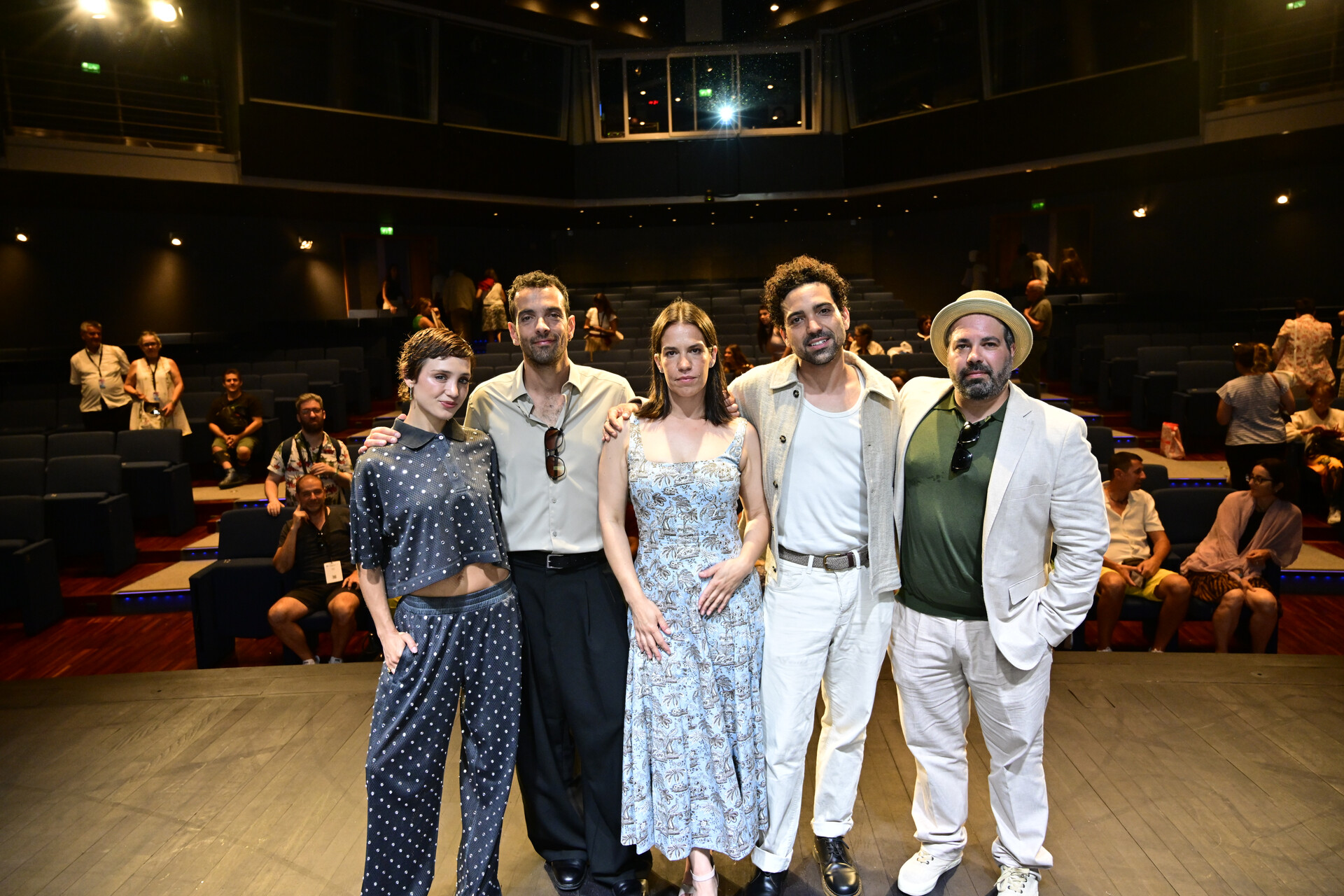
From left to right - Paula de Magalhaes, Jose Pimentao, Raquel Vieira, Rafael Morais and Bruno Gascon
Produced by Caracol Studios in co-production with RTP, Portugal's public broadcaster, Jones is distributed internationally by ORF-Enterprise. The six-part series follows Inspector Oliver Jones, a brilliant but reclusive detective with an unusual gift: he can communicate with the dead. When a lavish engagement party at a grand estate in Sintra ends in murder, Jones finds himself investigating a wealthy and dysfunctional family whose members all seem to have something to hide. His most unexpected ally becomes Júlia, the sharp-tongued victim herself, who joins him in trying to identify her own killer. Inspired by the spirit of Agatha Christie but infused with dark humour, family drama and the breathtaking Portuguese landscapes of Sintra and Vila Nova de Foz Côa, the series was selected to compete for the Golden Nymph Award in Monte-Carlo this year.
The inevitable comparison with Christie surfaced almost immediately during the discussion. Asked what he wanted to do differently from traditional whodunits, writer-director Bruno Gascon explained that homage was only the starting point.
"The idea was to deconstruct the usual whodunit things you see on television and on series," he said. "It was about trying to exactly create my own style inside of a genre."
For Gascon, that meant rejecting the archetypes often associated with classic mysteries. "Usually on this kind of whodunit series, normally the characters are stereotypical," he observed. "And the idea was to deconstruct that also and create this sort of unique style of it."
The goal, he explained, was to preserve the pleasures audiences expect from the genre while making something unmistakably his own. "You actually have the genre inside of it, but there are a few things that are actually quite different from the usual. It was creating a homage to it, but in my own vision."
That distinctive identity is reinforced by the series' multilingual nature. British actress Amanda Abbington joins a predominantly Portuguese cast, with characters moving naturally between English and Portuguese. For Raquel Rocha Vieira, that aspect immediately suggested international potential.
"I think when Bruno talked to us about Amanda, her role being Amanda playing it, we talked about this could reach more of an international audience also because it's multilingual," she said.
Working across languages turned out to be easier than anticipated.
"It was actually a lot of fun because we would talk in Portuguese and Amanda would answer in English," Rocha Vieira recalled. "And it worked very well. I thought it was going to be harder or stranger, but it was actually fluid."
Bby the end of filming, language barriers had all but disappeared. "I forgot I started talking in English with her."
Paula de Magalhães noted that the real challenge often fell to Abbington herself. "I think it was worse for her because all of us understand English, but she didn't understand Portuguese," she said. "So for her it was a little bit difficult."
José Pimentão, who plays Inspector Jones, argued that performance transcends language altogether.
"There's this sort of universal language which is people and their energies and their conflicts," he said. "What is the scene about? What is it really about? And that's what really matters."
"As long as you're aware of that and you walk that path, the language is just one more thing."
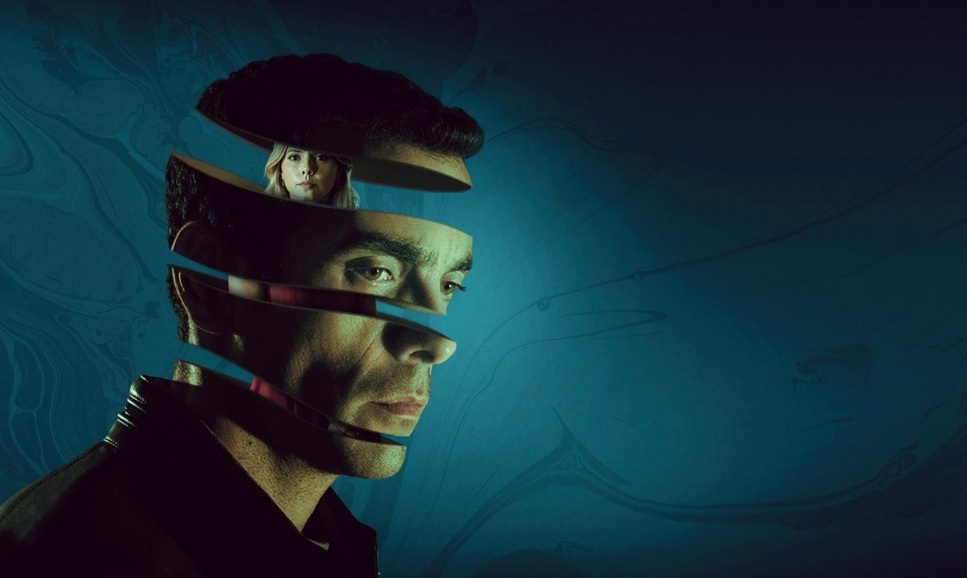
The supernatural element of the story — Jones' ability to speak with the dead — also sets the series apart from more conventional detective dramas. Gascon revealed that this aspect was part of his effort to reinvent the detective figure.
"I actually wanted to create this layer of this detective which was kind of different," he explained.
The device, however, serves purposes beyond novelty.
"I was trying to create not only this character which only was trying to find out who was the murderer," Gascon said. "I wanted also the detective to have this kind of different feel."
True to the spirit of the mystery, he remained cautious about revealing too much. "There are many things that I actually cannot spoil," he smiled. "We are going to have some differences even in that."
As Portugal increasingly seeks international visibility for its television productions, the conversation naturally turned toward what Portuguese storytelling can offer global audiences. The answers reflected both ambition and frustration.
"We have a lot of good projects and quality," de Magalhães said. But Portugal's size often creates obstacles. "We are so few, we are a small country and we can't pass the barrier."
She pointed to the dominance of Brazilian productions within the Portuguese-language market. "When they want to see some Portuguese productions, they will see a Brazilian production."
Gascon offered a more optimistic perspective.
"We are such a small country, we have to think local stories, but with global appeal," he said.
For him, emotional universality is the key to international success.
"Emotions are emotions everywhere," he observed. "The idea, at least what I try to do in my own projects, is that everyone can see it, doesn't matter where they are in the world."
At the same time, preserving Portuguese identity remains essential.
"Every country has their own way of speaking, of relationships," Gascon said. "But if you join that with something that the people in the world can connect with, it's a much easier way to do a series or a TV show that can actually travel."
The cast also spoke candidly about finding themselves within their characters. Rafael Morais admitted that his role required considerable transformation.
"I feel like part of my job as an actor is always to try to find myself in the character, in a way, to make it as genuine and organic as possible," he said.
"But that being said, it's a very, very extreme character that has a lot of differences from my personality as well."
Having worked previously with Gascon helped enormously.
"The ice has been broken before," Morais said. "That makes the job easier to explore and have the freedom and feel like I can also propose things."
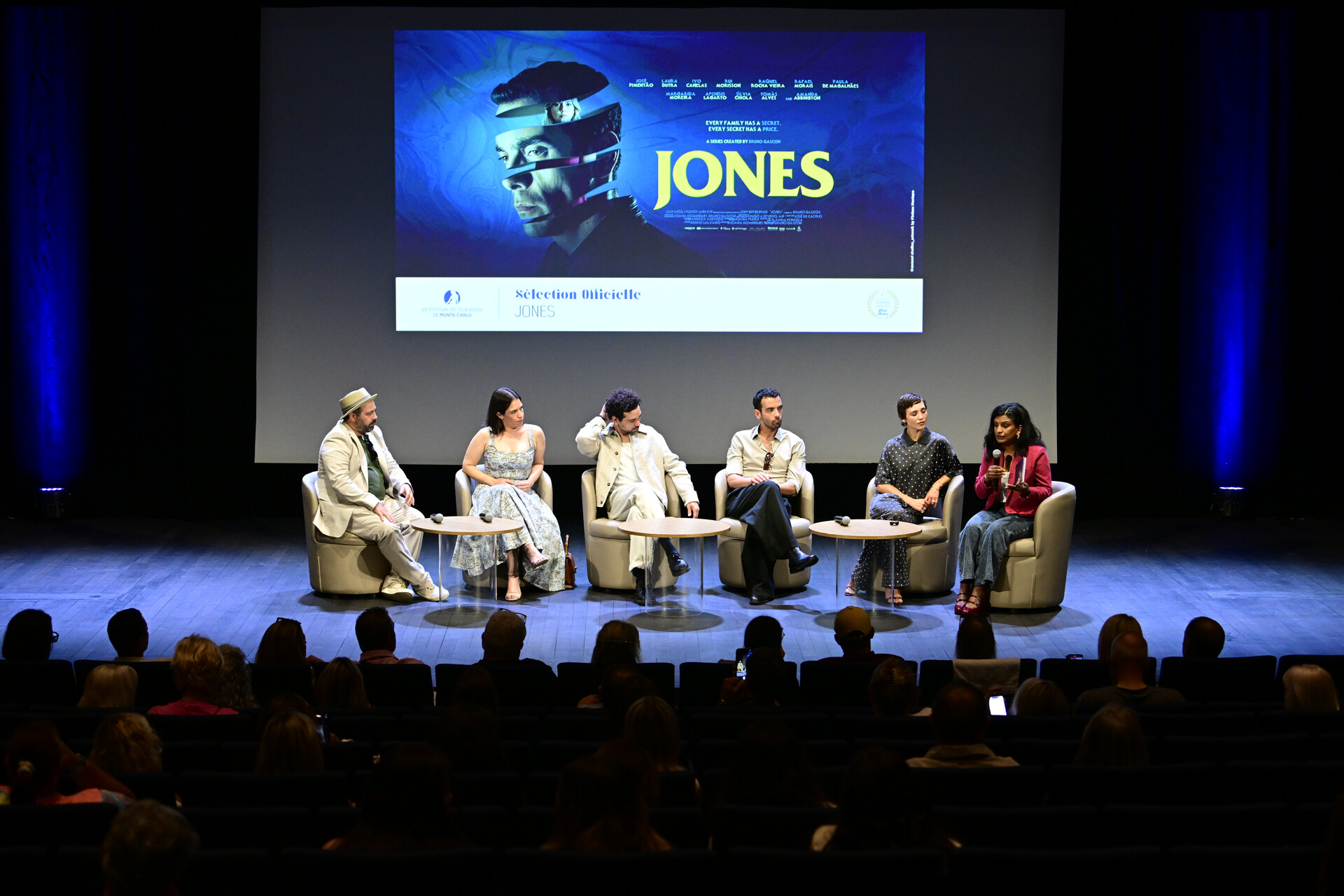
For him, acting is fundamentally collaborative. "Our job is not only just to show up and hit the mark and say the lines, but also to create the character and turn the characters our own."
Rocha Vieira similarly described the overlap between fiction and reality, particularly because of her close friendships with fellow cast members.
"Our characters have a relationship that's not that similar to us, but we are best friends in real life as well," she said. "So, for example, this was a mix of us and the characters."
Pimentão, meanwhile, found little of himself in Inspector Jones.
"Jones, for example, is really different from me," he admitted. "I find almost no similarities to me, to be honest."
He described the detective as cautious and withdrawn. "He's much more... someone who is not so much outgoing, who is very cautious towards other people, and I'm kind of the opposite of that."
Yet familiarity among the cast compensated for those differences. "Communication and understanding and connection" made the work easier.
For de Magalhães, however, Jéssica brought back memories of her younger self.
"Jéssica is a character who has a lot of similarities with me," she said.
"I was super naive, I was super, wow, a dreamy girl."
Laughing, she revealed that one of the character's defining traits came directly from her own habits. "Bruno puts a lot of babies on the script, because I treat everyone like baby," she said. "Even Bruno, I call him baby."
As for the future of Jones, Gascon remained cautious about the prospect of a second season. "It's not quite easy for you to have next seasons of things in Portugal," he acknowledged.
Would he return to the world of Inspector Jones?
"If I wanted to do it, yeah, probably I wanted to do it, because it was a very good experience."
But repetition holds little appeal. "For you to surprise people, you cannot do the things at the same way like you did before," he said. "If I wanted to do a season 2, you wouldn't feel like it was season 2. You would feel like it was something totally different again."
That philosophy perhaps best captures the spirit of Jones itself. It embraces the pleasures of classic mystery storytelling — suspicious families, hidden motives and the irresistible question of who committed the crime — while refusing to be constrained by convention.
The inevitable comparison with Christie surfaced almost immediately during the discussion. Asked what he wanted to do differently from traditional whodunits, writer-director Bruno Gascon explained that homage was only the starting point.
"The idea was to deconstruct the usual whodunit things you see on television and on series," he said. "It was about trying to exactly create my own style inside of a genre."
For Gascon, that meant rejecting the archetypes often associated with classic mysteries. "Usually on this kind of whodunit series, normally the characters are stereotypical," he observed. "And the idea was to deconstruct that also and create this sort of unique style of it."
The goal, he explained, was to preserve the pleasures audiences expect from the genre while making something unmistakably his own. "You actually have the genre inside of it, but there are a few things that are actually quite different from the usual. It was creating a homage to it, but in my own vision."
That distinctive identity is reinforced by the series' multilingual nature. British actress Amanda Abbington joins a predominantly Portuguese cast, with characters moving naturally between English and Portuguese. For Raquel Rocha Vieira, that aspect immediately suggested international potential.
"I think when Bruno talked to us about Amanda, her role being Amanda playing it, we talked about this could reach more of an international audience also because it's multilingual," she said.
Working across languages turned out to be easier than anticipated.
"It was actually a lot of fun because we would talk in Portuguese and Amanda would answer in English," Rocha Vieira recalled. "And it worked very well. I thought it was going to be harder or stranger, but it was actually fluid."
Bby the end of filming, language barriers had all but disappeared. "I forgot I started talking in English with her."
Paula de Magalhães noted that the real challenge often fell to Abbington herself. "I think it was worse for her because all of us understand English, but she didn't understand Portuguese," she said. "So for her it was a little bit difficult."
José Pimentão, who plays Inspector Jones, argued that performance transcends language altogether.
"There's this sort of universal language which is people and their energies and their conflicts," he said. "What is the scene about? What is it really about? And that's what really matters."
"As long as you're aware of that and you walk that path, the language is just one more thing."
The supernatural element of the story — Jones' ability to speak with the dead — also sets the series apart from more conventional detective dramas. Gascon revealed that this aspect was part of his effort to reinvent the detective figure.
"I actually wanted to create this layer of this detective which was kind of different," he explained.
The device, however, serves purposes beyond novelty.
"I was trying to create not only this character which only was trying to find out who was the murderer," Gascon said. "I wanted also the detective to have this kind of different feel."
True to the spirit of the mystery, he remained cautious about revealing too much. "There are many things that I actually cannot spoil," he smiled. "We are going to have some differences even in that."
As Portugal increasingly seeks international visibility for its television productions, the conversation naturally turned toward what Portuguese storytelling can offer global audiences. The answers reflected both ambition and frustration.
"We have a lot of good projects and quality," de Magalhães said. But Portugal's size often creates obstacles. "We are so few, we are a small country and we can't pass the barrier."
She pointed to the dominance of Brazilian productions within the Portuguese-language market. "When they want to see some Portuguese productions, they will see a Brazilian production."
Gascon offered a more optimistic perspective.
"We are such a small country, we have to think local stories, but with global appeal," he said.
For him, emotional universality is the key to international success.
"Emotions are emotions everywhere," he observed. "The idea, at least what I try to do in my own projects, is that everyone can see it, doesn't matter where they are in the world."
At the same time, preserving Portuguese identity remains essential.
"Every country has their own way of speaking, of relationships," Gascon said. "But if you join that with something that the people in the world can connect with, it's a much easier way to do a series or a TV show that can actually travel."
The cast also spoke candidly about finding themselves within their characters. Rafael Morais admitted that his role required considerable transformation.
"I feel like part of my job as an actor is always to try to find myself in the character, in a way, to make it as genuine and organic as possible," he said.
"But that being said, it's a very, very extreme character that has a lot of differences from my personality as well."
Having worked previously with Gascon helped enormously.
"The ice has been broken before," Morais said. "That makes the job easier to explore and have the freedom and feel like I can also propose things."
For him, acting is fundamentally collaborative. "Our job is not only just to show up and hit the mark and say the lines, but also to create the character and turn the characters our own."
Rocha Vieira similarly described the overlap between fiction and reality, particularly because of her close friendships with fellow cast members.
"Our characters have a relationship that's not that similar to us, but we are best friends in real life as well," she said. "So, for example, this was a mix of us and the characters."
Pimentão, meanwhile, found little of himself in Inspector Jones.
"Jones, for example, is really different from me," he admitted. "I find almost no similarities to me, to be honest."
He described the detective as cautious and withdrawn. "He's much more... someone who is not so much outgoing, who is very cautious towards other people, and I'm kind of the opposite of that."
Yet familiarity among the cast compensated for those differences. "Communication and understanding and connection" made the work easier.
For de Magalhães, however, Jéssica brought back memories of her younger self.
"Jéssica is a character who has a lot of similarities with me," she said.
"I was super naive, I was super, wow, a dreamy girl."
Laughing, she revealed that one of the character's defining traits came directly from her own habits. "Bruno puts a lot of babies on the script, because I treat everyone like baby," she said. "Even Bruno, I call him baby."
As for the future of Jones, Gascon remained cautious about the prospect of a second season. "It's not quite easy for you to have next seasons of things in Portugal," he acknowledged.
Would he return to the world of Inspector Jones?
"If I wanted to do it, yeah, probably I wanted to do it, because it was a very good experience."
But repetition holds little appeal. "For you to surprise people, you cannot do the things at the same way like you did before," he said. "If I wanted to do a season 2, you wouldn't feel like it was season 2. You would feel like it was something totally different again."
That philosophy perhaps best captures the spirit of Jones itself. It embraces the pleasures of classic mystery storytelling — suspicious families, hidden motives and the irresistible question of who committed the crime — while refusing to be constrained by convention.