
Kanal D All Set for a Strong MIPCOM Market
Kanal D International is looking forward to a fruitful MIPCOM market this year’s relying on fresh premieres, classic titles and new sales strategies aimed at maximizing the rich content catalog of the distributor. Elif Tatoğlu, Distribution Strategy & Sales Director, talks to TVBIZZ Magazine about her expectations for the market, their latest deals, the new trends among buyers and how Kanal D adjusts to the constantly evolving rights industry.
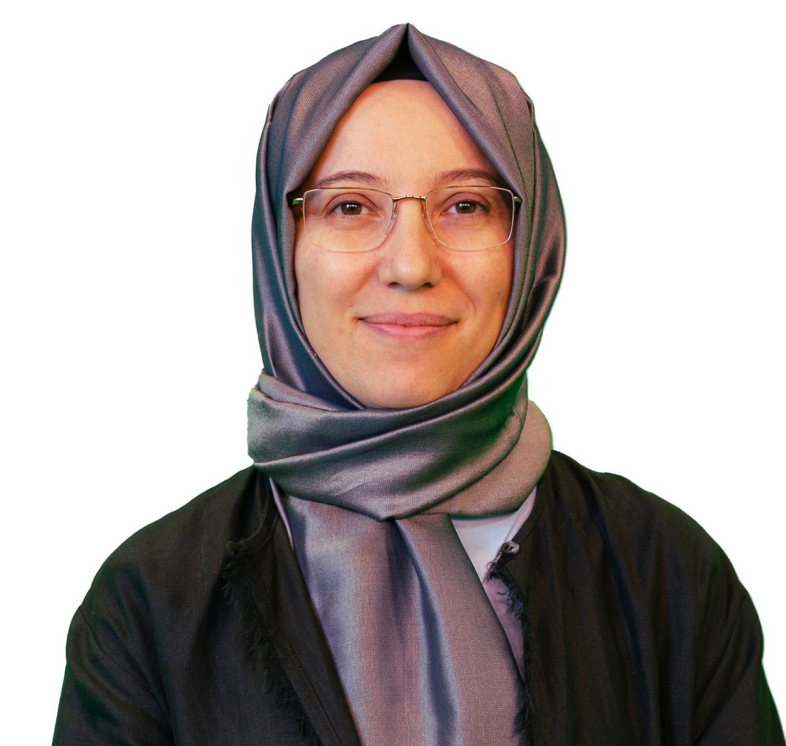
Elif Tatoğlu, Distribution Strategy & Sales Director
Kanal D International enters MIPCOM with a strong combination of new dramas, established hits and a growing formats business. What are the key titles and strategic priorities you will be putting in the spotlight in Cannes this year?
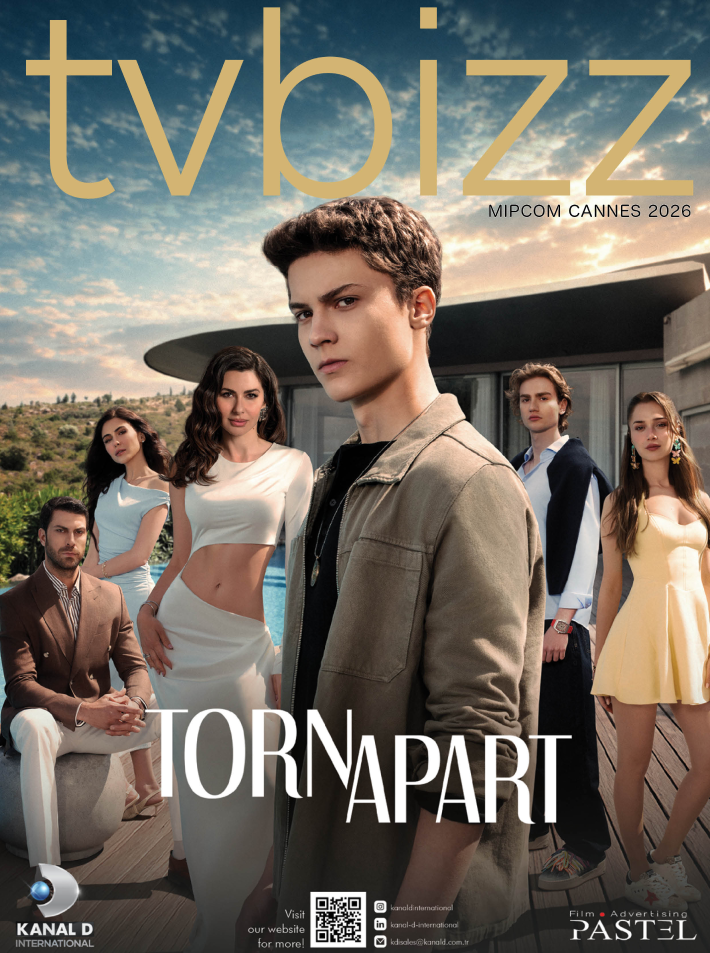
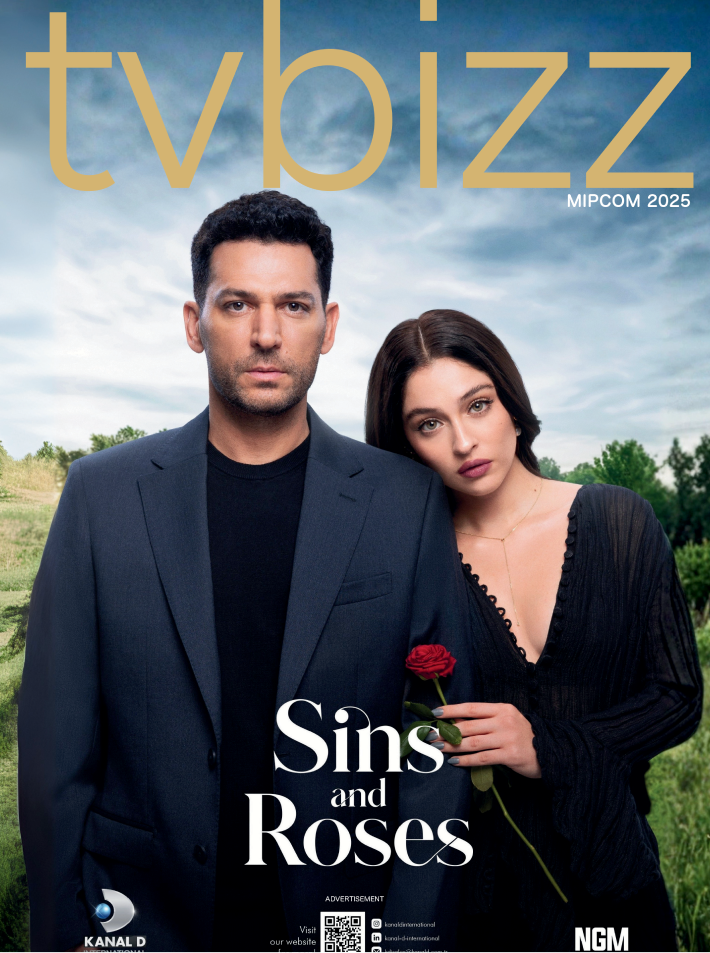
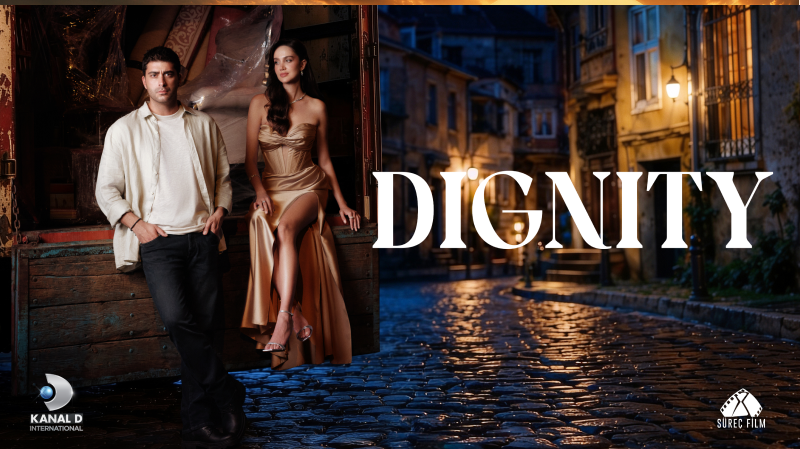
This year, we are coming to MIPCOM with a very strong slate and a clear focus on where we see the greatest potential. Dignity will be one of our major new launches in Cannes, while Torn Apart arrives at the market with very strong momentum, having launched successfully over the summer and carried that performance into the new season. Sins & Roses, meanwhile, is entering an important new phase with its second season, building on the strong international journey it has already established.
But our MIPCOM offering goes well beyond the new season. Our evergreen catalog remains a very important part of our business, and we continue to see strong demand for these titles through traditional ready-made sales, as well as new windows and audiences on digital platforms.
Another important priority for us is scripted formats. We are increasingly looking at our catalog not only in terms of finished-content sales, but also as a strong library of IP that can be adapted for different markets. We are already seeing growing interest in both our recent and established titles for local adaptations.
So, our strategy in Cannes is really about maximizing the value of the entire catalog: launching our strongest new stories, continuing to build the international life of successful titles, and creating new opportunities for our IP to travel across different platforms, windows and through local adaptations.
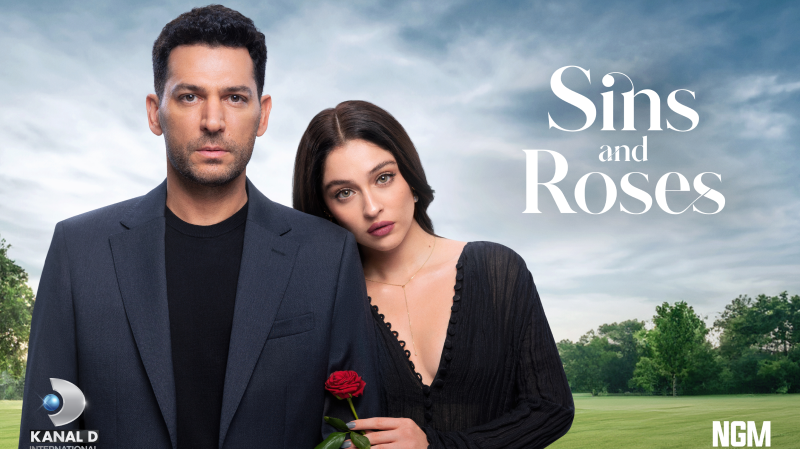
Sins & Roses has become one of your strongest recent international performers, with sales across multiple territories and its first Latin American deal in Panama. What do you believe is driving the series’ appeal internationally, and what have you learned from its journey so far?
I think what we have seen with Sins & Roses is that a strong emotional story can connect with audiences in very different markets. The series has a very clear emotional core: love, family, secrets and difficult choices. But at the same time, it feels contemporary, and the chemistry of the cast has been a very important part of that connection.
What has been particularly encouraging is seeing the series continue to open new doors internationally. Panama marked its first step into Latin America, and we expect to announce further sales in the region soon. Its journey so far also shows us that the series can travel successfully not only across territories, but across different types of platforms and audiences.
For us, the biggest learning has been that audiences may be very different from one market to another, but they still respond to the same fundamental emotions when the story feels authentic. Sins & Roses has demonstrated that very clearly, and with its second season now underway, we believe there is still a lot of international potential ahead.
Can you confirm the adaptation of the show in Greece and reveal more details about the deal? What is the potential of this drama as a format?
Yes, we can confirm that Sins & Roses has been licensed for local adaptations in both Greece and Portugal, which is a very exciting development for us. Seeing the story being reinterpreted in two different markets is also a strong indication of its potential as a format.
I think what makes it work particularly well as a format is the story itself. Love, betrayal, family relationships, secrets and second chances are themes that can resonate anywhere, while the relationships and conflicts between the characters leave enough room for each market to make the story its own.
These adaptations also come at an important time for Kanal D International, as we are steadily growing our formats business and, year by year, it is becoming a bigger priority for us. We have many proven stories in our catalog that we believe can find new lives through local adaptations, so this is definitely an area where we see significant room for growth.
Sins & Roses also recently won the Bronze Tower Award at the New York Festivals TV & Film Awards. How important are international awards and industry recognition in strengthening the positioning of a Turkish drama in global markets?
Awards are certainly valuable because they bring another level of visibility and credibility to a title. Buyers are exposed to an enormous amount of content today, so recognition from a respected international institution can help a series stand out and attract attention.
Of course, an award alone does not drive international sales. The story still has to connect with audiences and make sense for the needs of each broadcaster or platform. But it can reinforce the positioning of a series and show that its creative qualities are being recognized beyond its home market.
For Sins & Roses, the Bronze Tower Award at the New York Festivals TV & Film Awards was particularly meaningful because it came at a time when the series was already building a strong international journey. For us, it was another confirmation that the story is connecting not only with audiences and buyers, but also with the wider international industry.
Your current catalog includes Torn Apart as a 2026 premium drama alongside Sins & Roses, The Family Burden and Secret of Pearls. What are buyers looking for today, and how has the profile of a “globally exportable” Turkish drama changed compared with a few years ago?
I think buyers have become much more selective, but at the same time their needs have also become much more diverse. There is no longer one definition of what an internationally successful Turkish drama should look like.
Of course, the emotional storytelling that Turkish drama is known for is still at the heart of what buyers respond to. But today, we have clients looking for very different things. Some are looking for a big family drama for a broad free-TV audience, some want younger-skewing stories, some are looking for shorter or faster-moving narratives for digital platforms, while others come to us specifically for proven catalog titles. So for us, it is increasingly about understanding what each buyer actually needs rather than trying to define one type of “exportable” drama.
Torn Apart is a very good example. It has a young cast, a beautiful setting and a fresh energy, which immediately gives it a different profile. But when you go deeper into the story, you also have all the elements that international audiences traditionally respond to in Turkish drama: a powerful family story, secrets, revenge, impossible love and mystery. So it can attract a younger audience without losing the broader emotional appeal.
And when you look at Sins & Roses, The Family Burden or Secret of Pearls, they are all quite different from one another. I think that is actually the strength of our catalog. We don’t believe there is one formula that travels everywhere. Our job is to understand the market, the platform and the audience, and then identify which story from our catalog has the strongest potential for that particular buyer.
In your recent interviews, you have repeatedly highlighted the strength of family-driven and emotionally grounded stories. At a time when many Turkish productions are moving toward darker, action-oriented and crime-focused narratives, is there a renewed international opportunity for family drama and romance?
I am not sure I would call it a renewed opportunity because I don’t think family drama and romance ever really went away. Trends change, of course and in recent years we have seen more crime, action and darker stories coming out of Türkiye. Part of this has been driven by the changing profile of the domestic audience but also by the increasing pressure on linear TV revenues and the need to attract broader audiences to television.
As Kanal D, however, we have preferred to stay true to our DNA. Family, relationships and emotionally driven storytelling have always been at the heart of what we do. And internationally there has consistently been a strong audience for exactly these kinds of stories.
If you look at the Turkish dramas that have travelled for many years and continue to find new audiences today, emotion is usually at the center of them. It can be a love story, a family conflict, a story about betrayal, sacrifice or belonging. The genre can change but audiences still need characters and relationships they can become emotionally invested in.
We can see this very clearly in our own catalog. Some of our evergreen titles are still travelling many years after their original broadcast, while newer titles such as Sins & Roses are connecting with audiences across very different markets. For me, that shows that these themes are not a trend; they are one of the fundamental strengths of Turkish drama.
What changes is how we tell these stories. They need new characters, new worlds and a contemporary perspective. But family, love and human relationships will always have the ability to cross borders.
Kanal D International has been particularly successful in giving older titles a new international life. Fatmagül is now joining Netflix across Latin America, while Time Goes By continues to find new audiences in Europe. How do you approach the rediscovery and repositioning of library titles in today’s streaming market?
I think one of the biggest changes streaming has brought is the way we look at the age of content. For the audience, especially on a streaming platform, what matters is not necessarily when a series was originally produced, but whether the story still works and whether they are discovering it for the first time.
Fatmagül is probably one of the best examples of this. It has been licensed in more than 150 countries, adapted locally and watched by audiences around the world, and now it is finding another generation of viewers on Netflix across Latin America. For us, that is not simply bringing back an older title, it shows the long-term value of a proven story.
This is why we don’t really look at our library as something from the past. It is a very active part of our business. Of course, not every title is right for every platform or every market, so the key is to understand where there is still an audience, where a title has not been fully exploited, or where a new platform can introduce it to a different generation of viewers.
And I think this is becoming increasingly important in today’s market. There is enormous value in strong, proven IP, and our catalog gives us the opportunity to keep creating new windows for stories that have already demonstrated their ability to travel. A good story does not become less relevant simply because it was produced ten or fifteen years ago.
Format sales are becoming an increasingly important part of Kanal D International’s business, with Three Sisters adapted in Kazakhstan and Ruthless City successfully adapted by Portugal’s SIC. What makes a Turkish drama suitable for adaptation, and do you expect formats to become a significantly larger part of your international strategy?
Formats are definitely becoming a more important part of our international strategy. We have been growing this side of the business steadily and we are now seeing interest across a much broader range of our IP.
For me, what makes a drama suitable for adaptation is not simply that the original was successful. The story needs to have a strong core that can survive localization. The central relationships, conflicts and motivations need to make sense in another culture, while still giving the local producer enough flexibility to change the setting, the rhythm and certain elements of the story for their own audience.
We also don’t see formats and ready-made sales as competing businesses. The same IP can have very different journeys in different markets. In one territory, the original Turkish series may be the right product, in another, the story may have much greater potential as a local adaptation. That gives us more ways to develop and extend the international value of our catalog.
We have a large library of proven IP, so yes, we expect formats to become a bigger part of our business. It is a natural area of growth for us and one where we see considerable potential in the coming years.
You have previously spoken about the need to diversify beyond traditional broadcast sales, particularly through AVOD, SVOD, YouTube and FAST. How far has Kanal D International progressed with this strategy, and what new digital opportunities are you looking at now? How about the growing popularity of microdramas?
Digital is no longer an additional window for us; it has become an important part of how we develop our business internationally. Kanal D International continues to expand across SVOD, AVOD, YouTube and FAST, in multiple languages and across different territories. This allows us not only to reach new audiences, but also to extend the life of our content and create new opportunities across our catalog.
Microdrama is also an interesting area for us, and we have actually started experimenting with it locally through Kanal D’s digital assets. As part of this, we took some of our classic titles and re-edited them into a vertical, short-form format to see how audiences would respond. The initial results were encouraging and gave us an opportunity to understand the format and audience behaviour first-hand.
We are now taking that experience to the international market and offering these vertical versions to clients who are exploring microdrama and short-form content. I think there is an interesting opportunity here, particularly because these are already known and proven titles. It allows us to experiment with a new form of consumption while building on IP that audiences already recognize.
Turkish drama has become one of the world’s most successful non-English content exports, but the volume of Turkish productions has also increased dramatically. Does the growing supply make international distribution more difficult, and how do you decide which titles deserve the biggest global push?
There is definitely much more content coming out of Türkiye today, so naturally buyers have more choice and competition is stronger. But I don’t necessarily see that as a negative. It also means there are more stories, more creative voices and potentially more opportunities for us internationally.
At the same time, not every successful Turkish series will automatically become an international success, and domestic ratings alone don’t tell you whether a title will travel.
For us, deciding which titles to push is therefore a combination of many things. We look at the story and cast, of course, but also at what we are hearing from our clients, which markets we can see it working in and whether there is something that makes the title distinctive internationally.
And I think this is where knowing your catalog and knowing your clients really matters. With the amount of content available today, our role is not simply to bring more titles to the market. It is to understand where each title has the best chance of travelling and build the international strategy around that.
Looking ahead to 2027, which territories do you see offering the biggest growth opportunities for Kanal D International, and what would you like the company’s international business to look like by the next MIPCOM?
We want to continue strengthening our position in established markets such as MENA, Latin America, CEE and the CIS, while we still see significant room to grow further in Europe and across Asia. But for us, growth is not simply about adding new territories to the map. There is still a lot more we can do within the markets where we are already present through new broadcasters and platforms, different rights and windows, local adaptations and digital opportunities.
By the next MIPCOM, I would like to see an even more diversified international business. Ready-made sales will remain at the heart of what we do, but I expect formats to represent a bigger part of our business, digital distribution to continue expanding and our library to keep creating new opportunities alongside our newest productions.
Kanal D International was there at the beginning of Turkish drama’s international journey, with stories that helped introduce Turkish series to audiences around the world. As the industry and the way people consume content continue to evolve, we want to be part of its next chapter as well, not only by bringing new stories to the international market, but by finding new forms, new platforms and new ways for our IP to reach audiences around the world.
This year, we are coming to MIPCOM with a very strong slate and a clear focus on where we see the greatest potential. Dignity will be one of our major new launches in Cannes, while Torn Apart arrives at the market with very strong momentum, having launched successfully over the summer and carried that performance into the new season. Sins & Roses, meanwhile, is entering an important new phase with its second season, building on the strong international journey it has already established.
But our MIPCOM offering goes well beyond the new season. Our evergreen catalog remains a very important part of our business, and we continue to see strong demand for these titles through traditional ready-made sales, as well as new windows and audiences on digital platforms.
Another important priority for us is scripted formats. We are increasingly looking at our catalog not only in terms of finished-content sales, but also as a strong library of IP that can be adapted for different markets. We are already seeing growing interest in both our recent and established titles for local adaptations.
So, our strategy in Cannes is really about maximizing the value of the entire catalog: launching our strongest new stories, continuing to build the international life of successful titles, and creating new opportunities for our IP to travel across different platforms, windows and through local adaptations.
Sins & Roses has become one of your strongest recent international performers, with sales across multiple territories and its first Latin American deal in Panama. What do you believe is driving the series’ appeal internationally, and what have you learned from its journey so far?
I think what we have seen with Sins & Roses is that a strong emotional story can connect with audiences in very different markets. The series has a very clear emotional core: love, family, secrets and difficult choices. But at the same time, it feels contemporary, and the chemistry of the cast has been a very important part of that connection.
What has been particularly encouraging is seeing the series continue to open new doors internationally. Panama marked its first step into Latin America, and we expect to announce further sales in the region soon. Its journey so far also shows us that the series can travel successfully not only across territories, but across different types of platforms and audiences.
For us, the biggest learning has been that audiences may be very different from one market to another, but they still respond to the same fundamental emotions when the story feels authentic. Sins & Roses has demonstrated that very clearly, and with its second season now underway, we believe there is still a lot of international potential ahead.
Can you confirm the adaptation of the show in Greece and reveal more details about the deal? What is the potential of this drama as a format?
Yes, we can confirm that Sins & Roses has been licensed for local adaptations in both Greece and Portugal, which is a very exciting development for us. Seeing the story being reinterpreted in two different markets is also a strong indication of its potential as a format.
I think what makes it work particularly well as a format is the story itself. Love, betrayal, family relationships, secrets and second chances are themes that can resonate anywhere, while the relationships and conflicts between the characters leave enough room for each market to make the story its own.
These adaptations also come at an important time for Kanal D International, as we are steadily growing our formats business and, year by year, it is becoming a bigger priority for us. We have many proven stories in our catalog that we believe can find new lives through local adaptations, so this is definitely an area where we see significant room for growth.
Sins & Roses also recently won the Bronze Tower Award at the New York Festivals TV & Film Awards. How important are international awards and industry recognition in strengthening the positioning of a Turkish drama in global markets?
Awards are certainly valuable because they bring another level of visibility and credibility to a title. Buyers are exposed to an enormous amount of content today, so recognition from a respected international institution can help a series stand out and attract attention.
Of course, an award alone does not drive international sales. The story still has to connect with audiences and make sense for the needs of each broadcaster or platform. But it can reinforce the positioning of a series and show that its creative qualities are being recognized beyond its home market.
For Sins & Roses, the Bronze Tower Award at the New York Festivals TV & Film Awards was particularly meaningful because it came at a time when the series was already building a strong international journey. For us, it was another confirmation that the story is connecting not only with audiences and buyers, but also with the wider international industry.
Your current catalog includes Torn Apart as a 2026 premium drama alongside Sins & Roses, The Family Burden and Secret of Pearls. What are buyers looking for today, and how has the profile of a “globally exportable” Turkish drama changed compared with a few years ago?
I think buyers have become much more selective, but at the same time their needs have also become much more diverse. There is no longer one definition of what an internationally successful Turkish drama should look like.
Of course, the emotional storytelling that Turkish drama is known for is still at the heart of what buyers respond to. But today, we have clients looking for very different things. Some are looking for a big family drama for a broad free-TV audience, some want younger-skewing stories, some are looking for shorter or faster-moving narratives for digital platforms, while others come to us specifically for proven catalog titles. So for us, it is increasingly about understanding what each buyer actually needs rather than trying to define one type of “exportable” drama.
Torn Apart is a very good example. It has a young cast, a beautiful setting and a fresh energy, which immediately gives it a different profile. But when you go deeper into the story, you also have all the elements that international audiences traditionally respond to in Turkish drama: a powerful family story, secrets, revenge, impossible love and mystery. So it can attract a younger audience without losing the broader emotional appeal.
And when you look at Sins & Roses, The Family Burden or Secret of Pearls, they are all quite different from one another. I think that is actually the strength of our catalog. We don’t believe there is one formula that travels everywhere. Our job is to understand the market, the platform and the audience, and then identify which story from our catalog has the strongest potential for that particular buyer.
In your recent interviews, you have repeatedly highlighted the strength of family-driven and emotionally grounded stories. At a time when many Turkish productions are moving toward darker, action-oriented and crime-focused narratives, is there a renewed international opportunity for family drama and romance?
I am not sure I would call it a renewed opportunity because I don’t think family drama and romance ever really went away. Trends change, of course and in recent years we have seen more crime, action and darker stories coming out of Türkiye. Part of this has been driven by the changing profile of the domestic audience but also by the increasing pressure on linear TV revenues and the need to attract broader audiences to television.
As Kanal D, however, we have preferred to stay true to our DNA. Family, relationships and emotionally driven storytelling have always been at the heart of what we do. And internationally there has consistently been a strong audience for exactly these kinds of stories.
If you look at the Turkish dramas that have travelled for many years and continue to find new audiences today, emotion is usually at the center of them. It can be a love story, a family conflict, a story about betrayal, sacrifice or belonging. The genre can change but audiences still need characters and relationships they can become emotionally invested in.
We can see this very clearly in our own catalog. Some of our evergreen titles are still travelling many years after their original broadcast, while newer titles such as Sins & Roses are connecting with audiences across very different markets. For me, that shows that these themes are not a trend; they are one of the fundamental strengths of Turkish drama.
What changes is how we tell these stories. They need new characters, new worlds and a contemporary perspective. But family, love and human relationships will always have the ability to cross borders.
Kanal D International has been particularly successful in giving older titles a new international life. Fatmagül is now joining Netflix across Latin America, while Time Goes By continues to find new audiences in Europe. How do you approach the rediscovery and repositioning of library titles in today’s streaming market?
I think one of the biggest changes streaming has brought is the way we look at the age of content. For the audience, especially on a streaming platform, what matters is not necessarily when a series was originally produced, but whether the story still works and whether they are discovering it for the first time.
Fatmagül is probably one of the best examples of this. It has been licensed in more than 150 countries, adapted locally and watched by audiences around the world, and now it is finding another generation of viewers on Netflix across Latin America. For us, that is not simply bringing back an older title, it shows the long-term value of a proven story.
This is why we don’t really look at our library as something from the past. It is a very active part of our business. Of course, not every title is right for every platform or every market, so the key is to understand where there is still an audience, where a title has not been fully exploited, or where a new platform can introduce it to a different generation of viewers.
And I think this is becoming increasingly important in today’s market. There is enormous value in strong, proven IP, and our catalog gives us the opportunity to keep creating new windows for stories that have already demonstrated their ability to travel. A good story does not become less relevant simply because it was produced ten or fifteen years ago.
Format sales are becoming an increasingly important part of Kanal D International’s business, with Three Sisters adapted in Kazakhstan and Ruthless City successfully adapted by Portugal’s SIC. What makes a Turkish drama suitable for adaptation, and do you expect formats to become a significantly larger part of your international strategy?
Formats are definitely becoming a more important part of our international strategy. We have been growing this side of the business steadily and we are now seeing interest across a much broader range of our IP.
For me, what makes a drama suitable for adaptation is not simply that the original was successful. The story needs to have a strong core that can survive localization. The central relationships, conflicts and motivations need to make sense in another culture, while still giving the local producer enough flexibility to change the setting, the rhythm and certain elements of the story for their own audience.
We also don’t see formats and ready-made sales as competing businesses. The same IP can have very different journeys in different markets. In one territory, the original Turkish series may be the right product, in another, the story may have much greater potential as a local adaptation. That gives us more ways to develop and extend the international value of our catalog.
We have a large library of proven IP, so yes, we expect formats to become a bigger part of our business. It is a natural area of growth for us and one where we see considerable potential in the coming years.
You have previously spoken about the need to diversify beyond traditional broadcast sales, particularly through AVOD, SVOD, YouTube and FAST. How far has Kanal D International progressed with this strategy, and what new digital opportunities are you looking at now? How about the growing popularity of microdramas?
Digital is no longer an additional window for us; it has become an important part of how we develop our business internationally. Kanal D International continues to expand across SVOD, AVOD, YouTube and FAST, in multiple languages and across different territories. This allows us not only to reach new audiences, but also to extend the life of our content and create new opportunities across our catalog.
Microdrama is also an interesting area for us, and we have actually started experimenting with it locally through Kanal D’s digital assets. As part of this, we took some of our classic titles and re-edited them into a vertical, short-form format to see how audiences would respond. The initial results were encouraging and gave us an opportunity to understand the format and audience behaviour first-hand.
We are now taking that experience to the international market and offering these vertical versions to clients who are exploring microdrama and short-form content. I think there is an interesting opportunity here, particularly because these are already known and proven titles. It allows us to experiment with a new form of consumption while building on IP that audiences already recognize.
Turkish drama has become one of the world’s most successful non-English content exports, but the volume of Turkish productions has also increased dramatically. Does the growing supply make international distribution more difficult, and how do you decide which titles deserve the biggest global push?
There is definitely much more content coming out of Türkiye today, so naturally buyers have more choice and competition is stronger. But I don’t necessarily see that as a negative. It also means there are more stories, more creative voices and potentially more opportunities for us internationally.
At the same time, not every successful Turkish series will automatically become an international success, and domestic ratings alone don’t tell you whether a title will travel.
For us, deciding which titles to push is therefore a combination of many things. We look at the story and cast, of course, but also at what we are hearing from our clients, which markets we can see it working in and whether there is something that makes the title distinctive internationally.
And I think this is where knowing your catalog and knowing your clients really matters. With the amount of content available today, our role is not simply to bring more titles to the market. It is to understand where each title has the best chance of travelling and build the international strategy around that.
Looking ahead to 2027, which territories do you see offering the biggest growth opportunities for Kanal D International, and what would you like the company’s international business to look like by the next MIPCOM?
We want to continue strengthening our position in established markets such as MENA, Latin America, CEE and the CIS, while we still see significant room to grow further in Europe and across Asia. But for us, growth is not simply about adding new territories to the map. There is still a lot more we can do within the markets where we are already present through new broadcasters and platforms, different rights and windows, local adaptations and digital opportunities.
By the next MIPCOM, I would like to see an even more diversified international business. Ready-made sales will remain at the heart of what we do, but I expect formats to represent a bigger part of our business, digital distribution to continue expanding and our library to keep creating new opportunities alongside our newest productions.
Kanal D International was there at the beginning of Turkish drama’s international journey, with stories that helped introduce Turkish series to audiences around the world. As the industry and the way people consume content continue to evolve, we want to be part of its next chapter as well, not only by bringing new stories to the international market, but by finding new forms, new platforms and new ways for our IP to reach audiences around the world.