

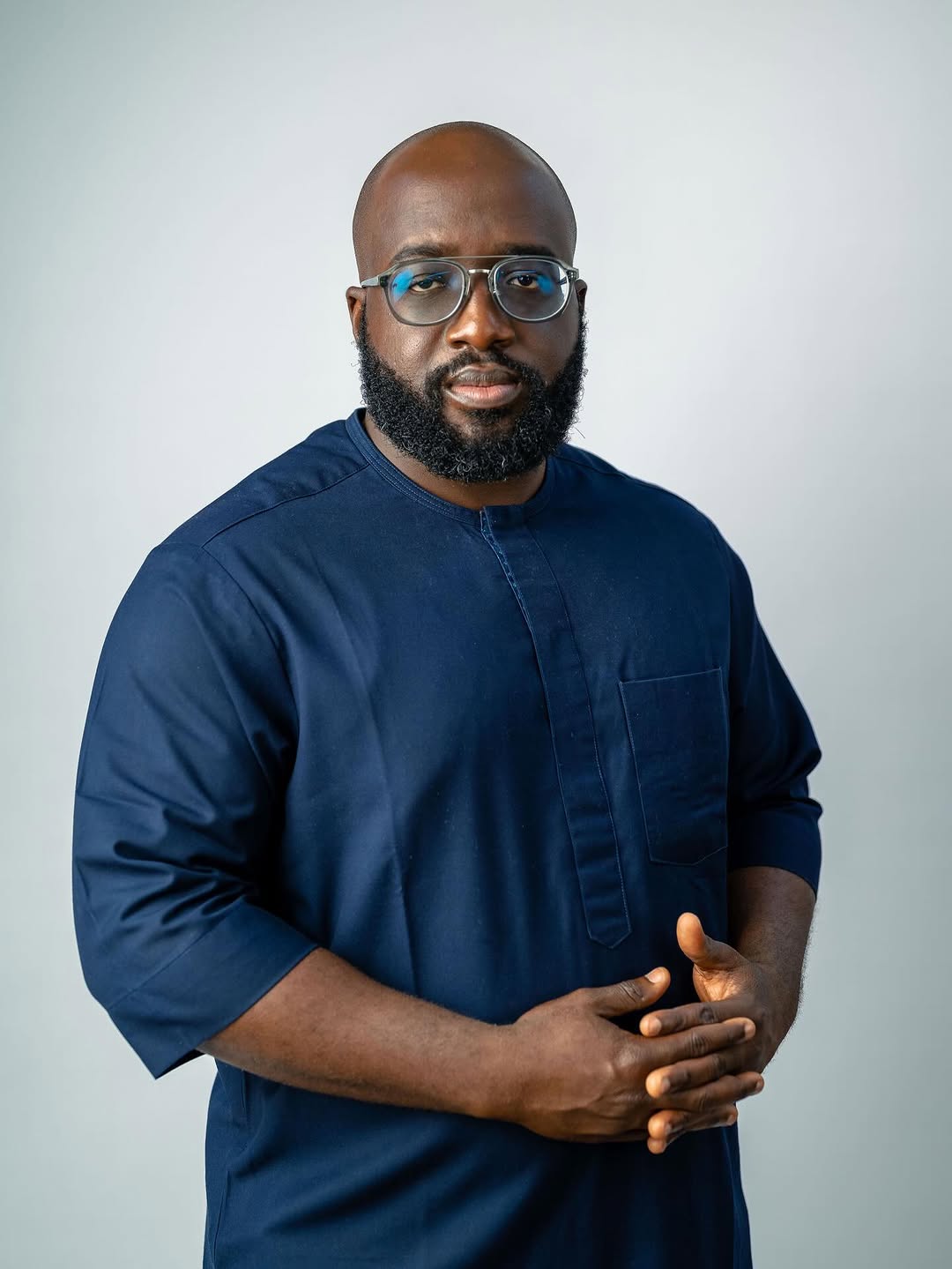
Co-founders Ifeoma Areh and Elijah Affi talk to Yako Molhov about the potential of African vertical storytelling and how it could enrich the microdrama universe which is only beginning to grow while it is also important to build talent now while the window of opportunity is open.

The global vertical video economy is now valued at $26 billion. What specific gap did you identify that convinced you Africa could become a dominant supplier of premium microdrama content?
Ifeoma Areh: The number that stopped us in our tracks was not the $26 billion. It was the absence of Africa inside it. When Elijah and I began mapping where content was being produced versus where the appetite existed, we found a structural vacuum. Platforms like ReelShort and DramaBox need volume and cultural diversity because their audiences are expanding beyond East Asia rapidly. African storytelling has the emotional intensity, the moral complexity, the community-rooted drama that microdrama as a format was literally built to deliver. The gap was not creative. African creators are phenomenally talented. The gap was format literacy and monetization architecture. Nobody was systematically training our best professionals to produce for this specific economy. The response to the Digital Creator Africa Academy for Microdrama has confirmed everything we suspected about the hunger that exists on this side of the market. We received thousands of applications within just two weeks of opening submissions. That is not a number you ignore.
Elijah Affi: I would add that what we identified was a timing window, and timing windows close. The platforms are in their content acquisition phase right now. What is significant is that several of these platforms are actively coming into Africa at this very moment, and this is no longer theoretical. We are already seeing commissioning deals, licensing agreements, and co-production arrangements coming through. We have African writers already working directly with platforms. The question is no longer whether these platforms want African content. They do. The question is whether Africa enters this moment as a well-organized, high-volume, premium supplier or scrambles to catch up after the preferred supplier relationships are already locked in. DCAAM is specifically designed to ensure we enter from a position of readiness.
What are the latest trends in microdrama you have identified?
Elijah Affi: Several things are happening simultaneously. First, episode runtimes are stabilizing between 90 seconds and three minutes, with opening hooks compressed to under 15 seconds. Platforms are learning from data exactly how long they have before a thumb scrolls. Second, serialized cliff-hangers are becoming more sophisticated. It is no longer enough to end on surprise; you have to end on unresolved emotional debt. Third, there is a pronounced shift toward aspirational and wish-fulfillment narratives, rags-to-riches, secret identity, romantic reversal of power, because these formats perform extraordinarily well on mobile platforms where the viewer is often consuming content during micro-breaks in their day. Fourth, AI-assisted localization is allowing content produced in one language to travel within weeks, which is compressing the window between production and international monetization significantly.
Ifeoma Areh: There is also something worth naming that cuts across all markets right now. Audiences are exhausted. The same wish-fulfillment templates, the same power-reversal formulas, the same archetypes recycled at industrial volume for years have produced a very real appetite fatigue, and viewers are actively demanding better stories and genuine narrative diversity. That is not a threat to this industry; it is the opening Africa has been waiting for. From an African-specific lens, we are also seeing that content rooted in recognizable cultural tension, family obligation, generational wealth conflict, spiritual authority versus modernity, travels surprisingly well internationally because these are not uniquely African tensions. They resonate in Southeast Asia, in Latin America, in diaspora communities globally. That is a strategic advantage we intend to build on deliberately.
Asian markets, particularly China's Duanju ecosystem, have industrialized microdrama production. What lessons from China and India are directly transferable to African creators, and what must be uniquely African?
Ifeoma Areh: The transferable lessons are primarily structural and operational. China's Duanju model taught the world that microdrama is not short film. It is closer to serialized soap opera engineering with the pacing of action cinema. The Chinese producers mastered the discipline of the hook, the escalation curve, and the episode-end emotional spike as repeatable craft elements, not artistic accidents. That discipline is directly transferable. India's ecosystem taught us the economics of volume, that profitability in this format comes from catalogue depth, not individual hit-making. Both of those lessons go straight into DCAA's curriculum.
Elijah Affi: What must be uniquely African is the moral and social grammar of our stories. The Chinese wish-fulfillment formula works in China partly because it is calibrated to Chinese social anxieties. If we simply replicate those templates, we produce imitation content that will always be second tier. Our strongest competitive position is content where the emotional logic is rooted in African social reality, the pressure of extended family systems, the particular texture of African ambition, the specific dynamics of gender and power in our communities. Platforms are actively looking for cultural distinctiveness. We should not sand that down; we should master it as a format asset.
Many African creators monetize successfully on YouTube but struggle to transition to premium vertical platforms. What structural storytelling changes are required to make that leap?
Elijah Affi: YouTube rewards retention across longer windows and favors a creator-personality relationship. The viewer follows you as a person. Vertical premium platforms reward narrative architecture and emotional addiction to story. The viewer follows the story, not the creator's face. That is a fundamental shift in how you construct your content identity. Structurally, African YouTube creators must unlearn the gradual build. On YouTube, you can spend two minutes establishing context. On a premium vertical platform, if your story has not created an unresolved emotional question within the first twelve seconds, you are losing. Additionally, YouTube creators are accustomed to single-episode satisfaction, a video has a beginning, middle, and end. Microdrama requires that you engineer incompleteness deliberately, episode after episode, across sometimes sixty to one hundred episodes per series. That is a different creative muscle entirely.
Ifeoma Areh: There is also a production discipline gap. YouTube content can be relatively forgiving on visual consistency and audio quality if your personality and information are strong enough. Premium vertical platforms have a quality floor that is non-negotiable because they are charging subscription fees and competing with other polished content. Our training closes that technical gap, but it also addresses the psychological shift, from content creator to drama producer. These are genuinely different professional identities.
Unlike traditional film schools, DCAA is positioned as a career accelerator. How does this model fundamentally differ from existing African film training institutions in terms of ROI and market readiness?
Ifeoma Areh: Traditional film schools, even excellent ones, are calibrated to a production and distribution economy that is frankly shrinking. They train people for theatrical release pipelines and broadcast television structures that are consolidating rapidly across Africa. The ROI timeline is long, the market entry points are narrow, and the gatekeepers are many. DCAA is built entirely backward from market demand. We started with what microdrama apps are paying for, what volumes they need, what format specifications they require, and then we built a curriculum that produces professionals who can supply that demand on day one of graduation. Market readiness is not an aspiration in our model. It is the design specification.
Elijah Affi: The other differentiator is that we are not producing graduates. We are producing production units. A DCAA cohort does not leave with a certificate and a portfolio. They leave as a functional micro-studio, writers, directors, producers, and technical leads who have already worked together under pressure and produced content to professional platform standards. That is the ROI difference. The question for our graduates is not whether they can get a job in the industry. It is how quickly their studio can take its first commission. The thousands of applications we received within two weeks of opening tells us there is a vast pool of experienced African professionals who have been waiting for exactly this kind of market-led training pathway.
You have cited platforms such as ReelShort, DramaBox, and ShortMax as monetization targets. Are you already in discussions with these players, or is the goal to build IP that can negotiate from a position of strength?
Elijah Affi: The honest answer is that both are already happening, and the story of how we got here is important context. These platforms did not pay attention to us or anything out of Africa initially. They understood the numbers in the abstract, Nigeria's population, the continent's mobile penetration, but that understanding was not translating into genuine market entry because they had not done the work of figuring out how Africa actually pays.
They assumed the monetization infrastructure was not there and moved on. What has shifted is that some of these platforms are now actively coming into the continent. Commissioning deals, licensing arrangements, co-production agreements are being structured and signed right now. We have writers from our network already working directly with platforms. This is no longer a future ambition; it is a present reality that DCAA is positioned to scale significantly. In terms of IP specifically, our strategy has always been to build it from a position of strength. When you arrive at a platform negotiation with a catalogue of production-ready African IP that already has proven format discipline and cultural specificity, the conversation is entirely different. We are building toward co-production frameworks and first-look agreements, the kinds of deals that give African creators structural equity in what they produce, not just work-for-hire rates.
Ifeoma Areh: And the payment infrastructure question is one that I feel very strongly about because it goes to the heart of why these platforms initially underestimated this market. The assumption was that Africa could not pay for premium content at the subscription models these platforms use globally. What that assumption missed is that Africa's mobile payment ecosystem is in several respects more sophisticated and more deeply embedded in everyday transactions than what exists in many Western markets. Mobile money infrastructure across the continent, the depth of adoption, the integration into daily commerce, the trust people place in mobile financial transactions, is genuinely world-class in ways that often surprise people who have not looked closely. The opportunity is clear: stock African content that reflects African faces and African stories, and then set up properly for how Africa pays. Those two things together unlock a market that has been sitting largely untapped. The novelty of foreign content only carries so far. Audiences engage initially out of curiosity, but it does not take long before people start asking where the people who look like them are. Africa pays for value and for recognition. When both are present, the market responds.
You are training 300 experienced professionals rather than beginners. What profile of filmmaker are you prioritizing, and what level of professional maturity is required to succeed in this high-volume model?
Ifeoma Areh: We are specifically targeting professionals who already understand production pressure, people who have worked in broadcast television, film production, advertising content, or digital series and have the discipline that comes from working to deadlines with real budgets and real consequences. The minimum bar is meaningful production experience, not just a portfolio. The high-volume microdrama model is unforgiving. A micro-studio producing a 60-episode series needs to maintain quality and creative coherence while working at a pace that would break someone who has only ever worked on simpler projects. We are looking for people who have already been tested by professional production environments and came out better for it. Ambition alone is not sufficient. We need professional resilience.
Elijah Affi: We are also prioritizing people who already have some collaborative infrastructure in their lives, writers who have worked with directors, producers who have managed creative teams. Because we are building production units, not individuals, people who have no experience of productive creative collaboration face a steeper adjustment. The ideal candidate brings craft, credits, and the emotional intelligence to work under sustained creative pressure with other strong personalities.
The Academy claims AI can cut production costs and time by up to 70%. Can you detail the specific AI workflows you are implementing?
Elijah Affi: The 70% figure comes from an honest mapping of where production time and money actually go in microdrama specifically. Script development and iteration historically consumes enormous time. We are implementing AI-assisted scriptwriting workflows that allow a writer to generate structurally sound episode drafts, stress-test hook mechanics, and run multiple narrative variations in hours rather than weeks. Pre-visualization and storyboarding, which traditionally requires dedicated artists and significant turnaround time, is now achievable with AI image and video generation tools that allow directors to walk into production with a fully visualized episode before a camera is lifted. Post-production localization, dubbing, subtitling, cultural adaptation, which used to be a significant cost and time barrier to multi-territory distribution, is being compressed dramatically by AI voice and translation tools. Casting support, scheduling optimization, and production management are all areas where AI workflow integration reduces the administrative load on production teams significantly.
Ifeoma Areh: What we are equally deliberate about is teaching our cohorts where AI should not replace human judgment. The emotional authenticity of a performance, the cultural specificity of a scene, the instinct for what will land with an African audience, these are not things we are outsourcing to any tool. AI is infrastructure in our model, not authorship.
DCAA uses a cohort-based studio model where participants graduate as functional production units. Does this signal a shift toward vertically integrated micro-studios rather than individual auteurs?
Ifeoma Areh: Yes, and we think this is the honest future of content production at the volume and pace this market requires. The auteur model is a beautiful tradition and it will always have a place in prestige long-form storytelling. But the vertical video economy does not reward individual genius on a three-year production cycle. It rewards consistent, high-quality volume from organized creative teams. The micro-studio model is actually closer to how television has always worked at its most productive, a strong showrunner vision executed by a disciplined, complementary team. We are simply formalizing that structure at a smaller, more agile scale and building it from the ground up rather than waiting for the industry to accidentally produce it.
Looking ahead, do you envision DCAA graduates primarily supplying global platforms, launching African-owned vertical platforms, or building exportable IP franchises that travel beyond the mobile-first ecosystem?
Elijah Affi: All three, in a deliberate sequence. Phase one is platform supply, and as I mentioned, this is already underway. Commissioning, licensing, co-production arrangements are happening now, and DCAA graduates will be positioned to participate in and accelerate that activity from a place of format competence and professional readiness.
Phase two is IP franchise development, taking the characters, universes, and narrative worlds that perform strongest on those platforms and building them into properties with value that travels far beyond any single platform or format. The model we are watching closely is what happened with successful K-drama IP that began in one format and expanded into merchandise, tourism, brand partnerships, and theatrical releases. African IP franchises with that kind of cultural gravity are entirely achievable, and the groundwork for that is laid in how we structure ownership and rights from the very beginning of production. Phase three, and the vision that drives everything for me, is African-owned infrastructure, platforms built on African terms, for African audiences and diaspora communities globally, that are not dependent on the goodwill of foreign platform owners for our creators' livelihoods.
Ifeoma Areh: And to bring it back to the market reality: the platforms that will win in Africa are the ones that solve both sides of the equation together. Stock African content that authentically reflects African life and African faces. And then build for how Africa pays. Our mobile payment infrastructure is not a limitation; in many respects it is ahead of the global curve. The platforms that recognize that and adapt accordingly will find an audience that is deeply engaged, genuinely loyal, and very willing to pay for content that sees them. That is the market DCAA graduates are being trained to supply and, ultimately, to own.