
Rola Bauer: Central and Eastern Europe is still an untapped storytelling powerhouse
Long before international co-productions became the industry's preferred model and years before streaming platforms changed the global content landscape, Rola Bauer was helping build ambitious dramas that brought together broadcasters, producers and financiers from multiple countries.
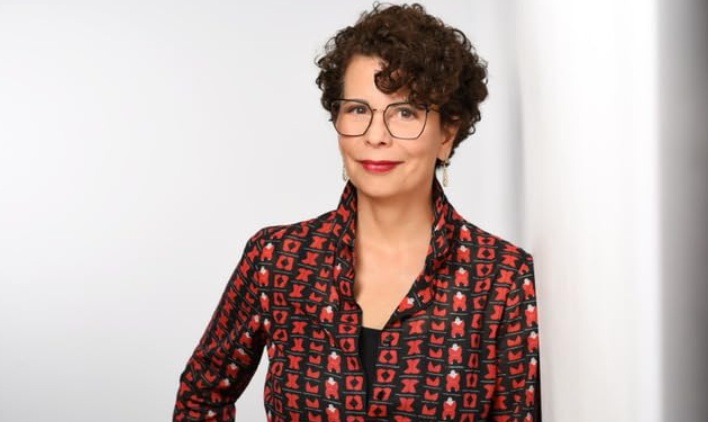
Rola Bauer
Today, the former President of International Television at MGM Studios and former Head of Pan-English Scripted Television at Amazon MGM Studios continues to influence the industry as an independent producer thru her RolaTalentsandProduction and is also an Advisory Board Member of the Monte-Carlo Television Festival.
Speaking with TVBIZZ at the Monte-Carlo Television Festival, Bauer reflected on a career spanning more than four decades and some of the most acclaimed international scripted series of the modern era, including Pillars of the Earth, Crossing Lines, ZeroZeroZero, Years and Years, War of the Worlds and The Man Who Fell to Earth. She also discussed the latest projects she is developing as an independent producer.
International co-productions have become a standard part of the television business nowadays, but Bauer remembers when they were less a strategic choice and more a necessity for smaller markets trying to compete internationally. "I believe that co-production has gone through, like many businesses, its ups and downs," she said. "Since I'm 40 years in doing this business, I've seen it explode."
Coming from Canada, Bauer saw firsthand how partnerships with international broadcasters and producers created opportunities that would otherwise have been impossible. "As a Canadian, co-productions were the only way that the small country of Canada, not dissimilar to Bulgaria, could work with partners around it," she explained. "We had a benefit in Canada with the language. We could work with our American partners, our UK partners, Australian partners and New Zealand. That was the foundation of co-production treaties."
Her experience later expanded across Europe, where she worked extensively with producers and broadcasters in countries including France, Hungary, the Czech Republic and Bulgaria. "I filmed in Sofia, in Budapest, in Prague," Bauer recalled. "We did tripartite co-productions between Canada, England and Hungary. Actually, it was a really, really great experience."
The arrival of global streamers fundamentally altered that model. "The streamers came in. They bought all the rights. They wanted global," Bauer said. "It became tough for a lot of broadcasters to compete with those types of programming and budgets."
Now, however, Bauer sees the industry shifting again. Following years of rapid expansion and enormous content spending, streamers are becoming more selective, while broadcasters are demonstrating that they remain powerful players in their own right. "We're seeing this moment where the streamers have discovered that they have put billions of dollars into this, but they cannot sustain it on the long term in many places," she said. "Maybe it's better to pick your battle."
As a result, Bauer believes traditional broadcasters are entering a new period of strength. "I think we're going to see not only the strength but the power of free TV coming back," she said.
The executive pointed to the continuing success of major live events, sports programming and entertainment formats as evidence that free-to-air television remains highly relevant despite years of predictions about its decline. "It is and always will be everywhere in the world," Bauer said. "You see that on a sports event and how it immediately captures the viewers. You see it on a variety event and it captures the viewers. You see it on good entertainment television and it captures the viewers."
Bauer is particularly enthusiastic about the potential of Central and Eastern Europe, a region she feels remains underappreciated as a source of original stories. While the region is frequently used by international productions as a filming destination, she believes its greatest strength remains largely underutilized.
"Central and Eastern Europe has so many different cultures, has so much in terms of the mythology of each one of the countries," she said. "You can dig into the stories. You can dig into the history of any of those countries. From that you will always find a very interesting story to tell...That is where I see a potential," she added.
Asked whether the future belongs to global blockbusters or highly local stories, Bauer rejected the notion that the industry must choose between the two. "I believe both are still there," she said. "I believe we need our global events, world building, fantasizing about things that we hadn't even thought was possible. And I also believe that you need your local stories."
That balance is something Bauer has pursued throughout her career. "I have started in this business always looking for projects that transcend the boundaries," she said. "It could work in the middle of America, it can work in Europe, it can work in Asia, in Australia... I love stories that move people. I love stories that enlighten people. And I love stories that entertain people."
Bauer has now returned to independent producing. While she remains actively involved in the industry and continues to advise the Monte-Carlo Television Festival, she says the move has allowed her to focus more directly on the types of projects that first attracted her to the business. "When I decided I didn't want to be in a corporate environment anymore, it was easy to slip back into something that I feel comfortable with," she said.
Bauer is currently developing three projects. One remains under wraps, but she revealed details of two others currently progressing through development.
The first is Pompeii: A Day of Fire, a limited series being developed with Ridley Scott's Scott Free Productions and writers Michael Hirst and Horatio Hirst. "We are doing the last three days of Pompeii," Bauer said. "I'm very excited about that one. We are now working with a potential director and making a deal. We'll probably add a cast and then we will go to market."
The second is a live-action adaptation of the globally recognized animated franchise Totally Spies!, which Bauer is producing as an action-comedy series. "It's an animated series that we're going to adapt to live action as an action comedy series," she revealed.
Among the many projects she has worked on, ZeroZeroZero remains one of Bauer's favorites. "It was incredible," Bauer said. "It told about the backbone of the whole financial world, which one of the biggest pillars within it is drug trafficking and the money that comes from that. The heart of it was a family who were the middlemen. It was really, really well done."
Another area that interests Bauer is the rise of digital creators and online-first storytelling. While she is not currently developing projects in that space herself, Bauer believes there is much the traditional television industry can learn from new forms of content creation. "It's a world that fascinates me because it's here, it's now," she said. "I'm monitoring it because the storytelling is very inspirational. It really is."
Bauer even pointed to projects she believes television executives should pay attention to. "Please take a moment and watch Screen Time from Issa Rae," she said. "Watch The Amazing Digital Circus. They're short, they're fun, they're emotional and they're really well done."
Few executives have witnessed as many changes in television as Bauer. Over four decades she has seen the business evolve from traditional international co-productions to the streaming era and now the rise of creator-driven content. Yet despite the constant changes in technology, distribution and financing, she believes the foundation of success remains remarkably simple. "The most important thing is a good story," she said. "If I don't feel for the story, if I don't believe in the story, then I usually just don't pursue it."
Speaking with TVBIZZ at the Monte-Carlo Television Festival, Bauer reflected on a career spanning more than four decades and some of the most acclaimed international scripted series of the modern era, including Pillars of the Earth, Crossing Lines, ZeroZeroZero, Years and Years, War of the Worlds and The Man Who Fell to Earth. She also discussed the latest projects she is developing as an independent producer.
International co-productions have become a standard part of the television business nowadays, but Bauer remembers when they were less a strategic choice and more a necessity for smaller markets trying to compete internationally. "I believe that co-production has gone through, like many businesses, its ups and downs," she said. "Since I'm 40 years in doing this business, I've seen it explode."
Coming from Canada, Bauer saw firsthand how partnerships with international broadcasters and producers created opportunities that would otherwise have been impossible. "As a Canadian, co-productions were the only way that the small country of Canada, not dissimilar to Bulgaria, could work with partners around it," she explained. "We had a benefit in Canada with the language. We could work with our American partners, our UK partners, Australian partners and New Zealand. That was the foundation of co-production treaties."
Her experience later expanded across Europe, where she worked extensively with producers and broadcasters in countries including France, Hungary, the Czech Republic and Bulgaria. "I filmed in Sofia, in Budapest, in Prague," Bauer recalled. "We did tripartite co-productions between Canada, England and Hungary. Actually, it was a really, really great experience."
The arrival of global streamers fundamentally altered that model. "The streamers came in. They bought all the rights. They wanted global," Bauer said. "It became tough for a lot of broadcasters to compete with those types of programming and budgets."
Now, however, Bauer sees the industry shifting again. Following years of rapid expansion and enormous content spending, streamers are becoming more selective, while broadcasters are demonstrating that they remain powerful players in their own right. "We're seeing this moment where the streamers have discovered that they have put billions of dollars into this, but they cannot sustain it on the long term in many places," she said. "Maybe it's better to pick your battle."
As a result, Bauer believes traditional broadcasters are entering a new period of strength. "I think we're going to see not only the strength but the power of free TV coming back," she said.
The executive pointed to the continuing success of major live events, sports programming and entertainment formats as evidence that free-to-air television remains highly relevant despite years of predictions about its decline. "It is and always will be everywhere in the world," Bauer said. "You see that on a sports event and how it immediately captures the viewers. You see it on a variety event and it captures the viewers. You see it on good entertainment television and it captures the viewers."
Bauer is particularly enthusiastic about the potential of Central and Eastern Europe, a region she feels remains underappreciated as a source of original stories. While the region is frequently used by international productions as a filming destination, she believes its greatest strength remains largely underutilized.
"Central and Eastern Europe has so many different cultures, has so much in terms of the mythology of each one of the countries," she said. "You can dig into the stories. You can dig into the history of any of those countries. From that you will always find a very interesting story to tell...That is where I see a potential," she added.
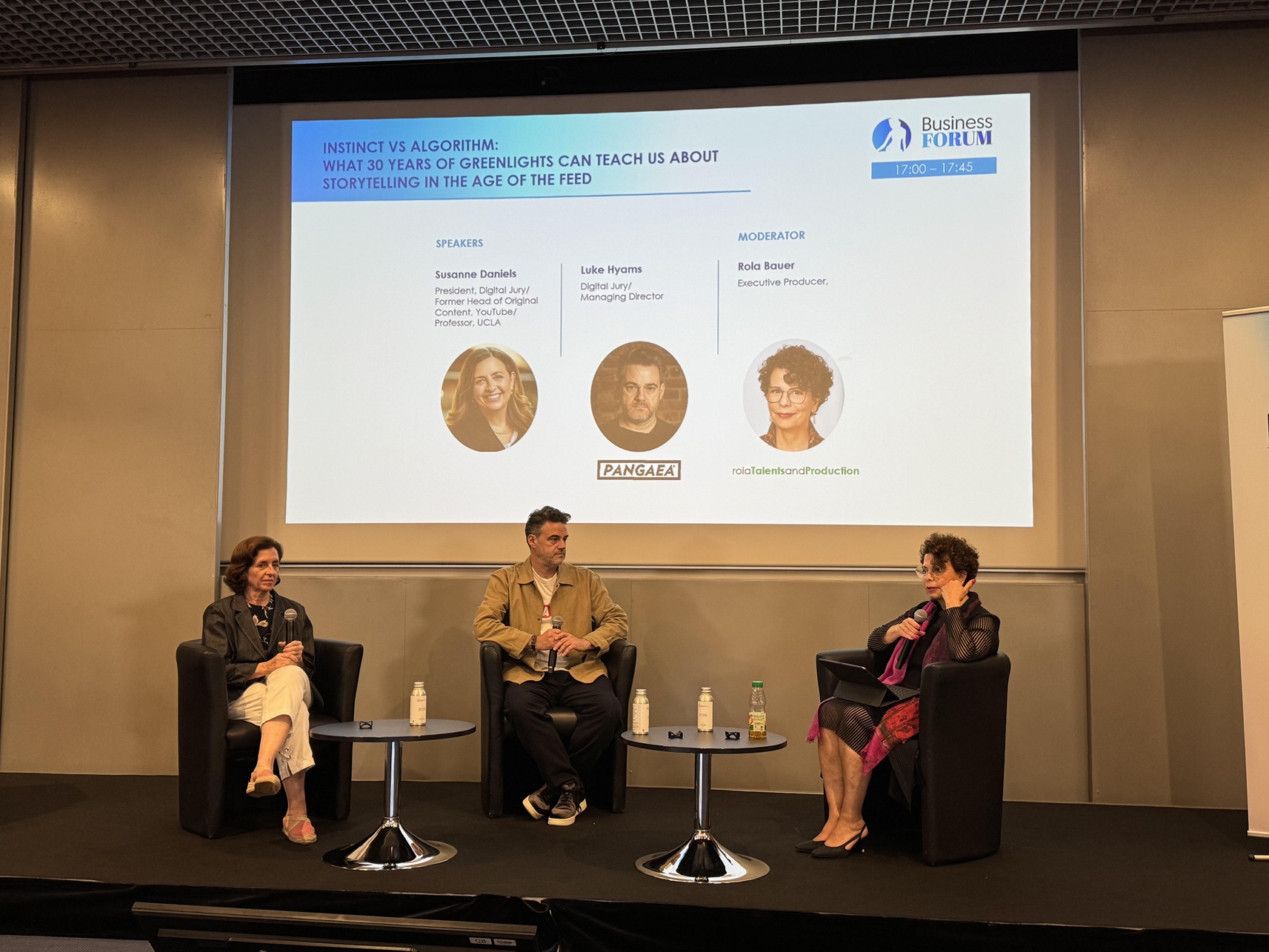
Rola Bauer moderating a panel at the Business Forum at MCTVF
Asked whether the future belongs to global blockbusters or highly local stories, Bauer rejected the notion that the industry must choose between the two. "I believe both are still there," she said. "I believe we need our global events, world building, fantasizing about things that we hadn't even thought was possible. And I also believe that you need your local stories."
That balance is something Bauer has pursued throughout her career. "I have started in this business always looking for projects that transcend the boundaries," she said. "It could work in the middle of America, it can work in Europe, it can work in Asia, in Australia... I love stories that move people. I love stories that enlighten people. And I love stories that entertain people."
Bauer has now returned to independent producing. While she remains actively involved in the industry and continues to advise the Monte-Carlo Television Festival, she says the move has allowed her to focus more directly on the types of projects that first attracted her to the business. "When I decided I didn't want to be in a corporate environment anymore, it was easy to slip back into something that I feel comfortable with," she said.
Bauer is currently developing three projects. One remains under wraps, but she revealed details of two others currently progressing through development.
The first is Pompeii: A Day of Fire, a limited series being developed with Ridley Scott's Scott Free Productions and writers Michael Hirst and Horatio Hirst. "We are doing the last three days of Pompeii," Bauer said. "I'm very excited about that one. We are now working with a potential director and making a deal. We'll probably add a cast and then we will go to market."
The second is a live-action adaptation of the globally recognized animated franchise Totally Spies!, which Bauer is producing as an action-comedy series. "It's an animated series that we're going to adapt to live action as an action comedy series," she revealed.
Among the many projects she has worked on, ZeroZeroZero remains one of Bauer's favorites. "It was incredible," Bauer said. "It told about the backbone of the whole financial world, which one of the biggest pillars within it is drug trafficking and the money that comes from that. The heart of it was a family who were the middlemen. It was really, really well done."
Another area that interests Bauer is the rise of digital creators and online-first storytelling. While she is not currently developing projects in that space herself, Bauer believes there is much the traditional television industry can learn from new forms of content creation. "It's a world that fascinates me because it's here, it's now," she said. "I'm monitoring it because the storytelling is very inspirational. It really is."
Bauer even pointed to projects she believes television executives should pay attention to. "Please take a moment and watch Screen Time from Issa Rae," she said. "Watch The Amazing Digital Circus. They're short, they're fun, they're emotional and they're really well done."
Few executives have witnessed as many changes in television as Bauer. Over four decades she has seen the business evolve from traditional international co-productions to the streaming era and now the rise of creator-driven content. Yet despite the constant changes in technology, distribution and financing, she believes the foundation of success remains remarkably simple. "The most important thing is a good story," she said. "If I don't feel for the story, if I don't believe in the story, then I usually just don't pursue it."