

Vitalii Gusiev, Starlight Production CEO: A stable and prosperous Ukrainian production market in 2026 is not a return to the pre-2022 model
In November last year, Ukraine’s largest production company Starlight Production announced that it has started a partnership with HOLYWATER to produce two new vertical drama series for the global market signalling a new stage in the strategic development of the company.
At the start of 2026, CEETV got in touch with Starlight Production’s CEO Vitalii Gusiev to talk about the company’s transformation in wartime conditions, the realization of projects both at home and abroad, and the partnerships and strategies that will shape the future of the Ukrainian content production industry.
At the start of 2026, CEETV got in touch with Starlight Production’s CEO Vitalii Gusiev to talk about the company’s transformation in wartime conditions, the realization of projects both at home and abroad, and the partnerships and strategies that will shape the future of the Ukrainian content production industry.

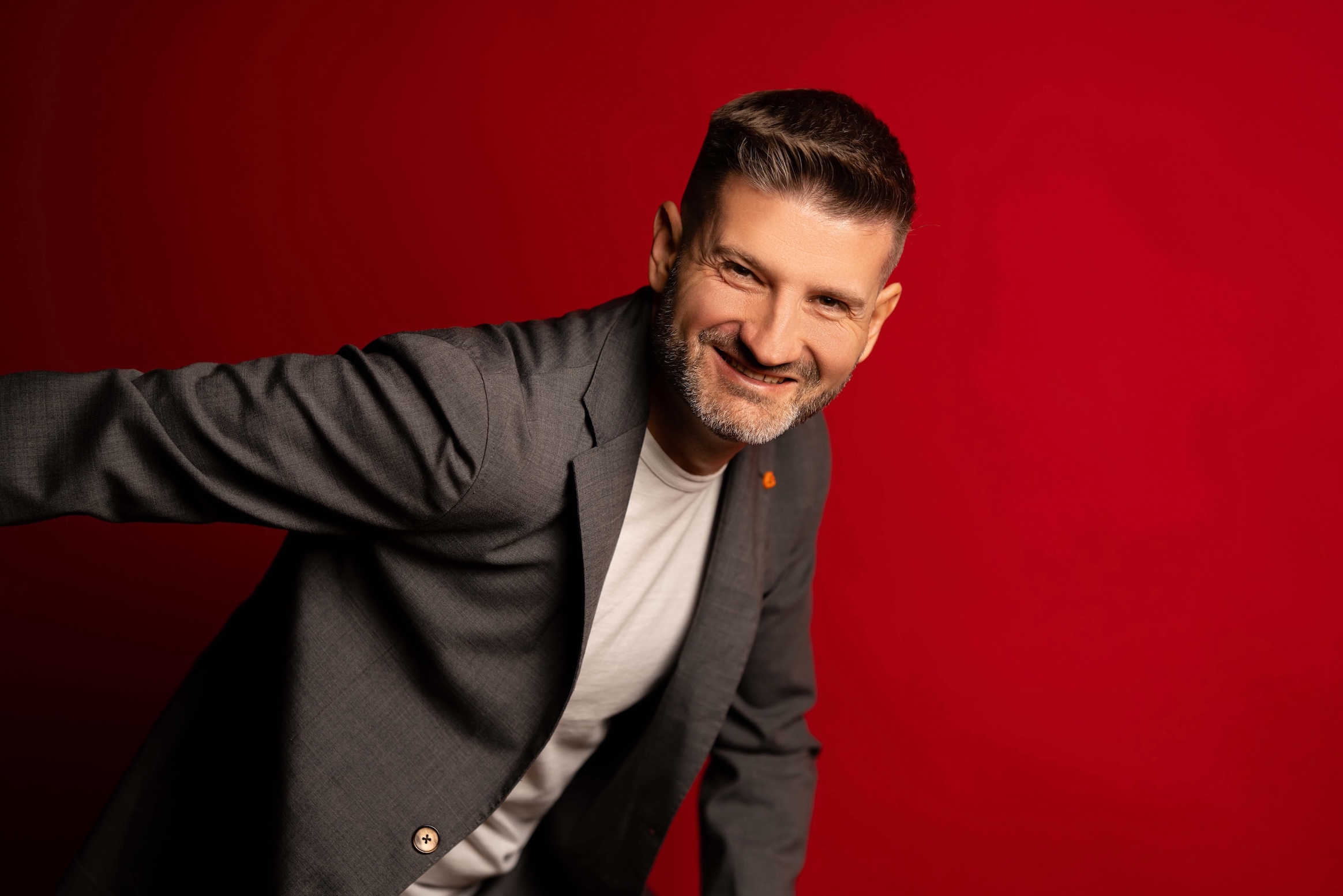
Vitalii Gusiev, CEO of Starlight Production
Vitalii, Starlight Media has successfully transformed into a "content-centric" business. What does this mean operationally? How are you managing the cultural shift from a traditional broadcaster to a multi-platform content factory?
From an operational perspective, a content-centric model means that our decisions start with the product’s commercial logic rather than with a specific platform. For every project, we first evaluate where and in what form it can deliver the strongest commercial results, and only then design the distribution strategy accordingly.
This is a fundamental shift in logic. It’s no longer “linear TV first, and then we see what happens,” but a deliberate decision about where content performs most effectively. Economics remain decisive: large, high-budget productions often still prioritize television, while digital-first products follow very different rules and cost structures.
The second major transformation is our move from standalone projects to building ecosystems around strong brands and IP. Every successful format has a core and multiple extensions: digital spin-offs, short-form formats, social platforms, and communities. Our ambition is not just to be present where content is discussed, but to lead those spaces with professional, high-quality formats that strengthen both the brand and its commercial potential.
Take The Bachelor as an example. The flagship show is the core brand, but around it, we develop products like Bachelor Backstage, which functions as an independent digital asset and can also be repurposed for linear television. In parallel, we produce short, highly shareable clips for Instagram, TikTok, YouTube Shorts, Facebook Reels, and Threads. These fragments drive reach, fuel virality, and have become extremely attractive for advertisers. The result is a brand with an intense center and multiple value-generating branches that reinforce that center.
Culturally, this shift requires platform-native thinking. Media consumption is increasingly fragmented and niche, so content must be designed with each platform's logic in mind. The most effective model is a single brand with a single DNA, expressed through different, platform-relevant formats on YouTube, TikTok, or linear television. Each serves its own audience, but together they strengthen the ecosystem as a whole.
Recent reports suggest that collaboration is key to survival for Ukrainian media giants. Are you actively seeking production or distribution partnerships with other major companies to pool resources and reduce costs on large-scale projects?
One model I strongly believe in is partnerships between media companies and media-technology players. For example, a collaboration that brings together a content producer, an OTT platform, and a telecom operator to build a joint platform. An additional major bank or a large, nationwide retail chain joining such alliances could give the entire ecosystem a strong customer-loyalty advantage. Flexible bundle offers that combine the partners’ unique capabilities will become the foundation of data-driven media in the new advertising economy.
Another area where we see strong potential is partnerships with media-technology companies for whom we produce content. A good example is our collaboration with HOLYWATER. We have deep expertise in producing a specific type of content – expertise that many players simply do not have. In these cases, we act not just as a supplier but as a creative and production partner, delivering content for international audiences and operating under very different rules than traditional television.
A third strategic direction is content production for streaming platforms. Here, I believe in an open model. Creators should be able to pitch an idea internally, but also take it to an external partner if it doesn’t move forward in-house and risks being left unrealized. From a long-term perspective, this kind of openness is more sustainable and economically sound than rigidly closed systems. It allows strong ideas to find the right home – and ultimately benefits the entire ecosystem.
What type of projects and genres are you focusing on right now?
Our priorities have remained consistent over the past few years. The core shift is not in genres, but in the capabilities we need to build internally.
First, there is a clear lack of experimentation in feature films – not simply in producing individual titles, but in developing in-house expertise in full-length filmmaking. Currently, this competence is largely lacking across the industry, and without it, we remain dependent on external decisions. Building that expertise internally is essential if we want greater creative and strategic autonomy.
Second, we are focused on developing expertise in original content production for streaming platforms. This is not an extension of television, but a separate discipline with its own creative, production, and commercial logic, requiring dedicated focus.
Another important direction is original content in film and series production, particularly in new formats. One area we find especially promising is vertical, multi-episode content. Specific formats are naturally suited to vertical viewing – for example, serial reality or observational series. A good example is a new project from Novy Channel that follows young people who move to Kyiv during the war in search of identity and opportunity. This type of storytelling can perform exceptionally well on vertical platforms, in some cases even more effectively than on YouTube. Given that marketing distribution today is primarily driven by TikTok and Instagram, platform logic increasingly dictates format rather than the other way around.
We also see commercial production as an essential experimental space. While it may not offer the most substantial direct financial upside, it provides a valuable environment for testing new tools – particularly AI-driven solutions. This allows us to reduce production costs and experiment with speed, form, and workflows in ways that are harder to do within large-scale content projects.
Finally, a critical principle across everything we develop is franchise potential. This applies to vertical content, series, and shows alike. The key question is not genre, but whether a project can scale, expand, and live beyond a single cycle. Long-term value comes from repeatability, adaptability, and the ability to monetize content over time.
What is your threshold for investment at Starlight Production in this high-risk environment? How do you balance creative ambition with the harsh commercial realities?
Starlight Production does not function as a traditional investor. We are primarily a production company working on commission, so it is more accurate to talk not about an “investment threshold,” but about the range of budgets we operate within. That range is deliberately broad.
At one end, we produce digital-first projects for platforms like YouTube, with budgets starting at around $5.000 per episode, where the decisive factors are the strength of the idea and consistency rather than scale. At the other end are large-format productions and backstage projects where budgets can cost us hundreds of thousands of dollars. Between these extremes, we produce classic studio shows. All of these projects coexist within the same production ecosystem.
I don’t see the balance between creative ambition and commercial reality as a trade-off where ideas must be reduced to fit the budget. In practice, the balance is achieved through proper format design. This includes how a season is structured, where cost-intensive moments are concentrated, how high- and lower-cost episodes alternate, and which elements can be moved outside the core production process. Very often, the issue is not that an idea is too ambitious, but that the production model behind it is poorly designed. Conversely, even complex and seemingly expensive ideas can be executed within a reasonable budget if the structure is carefully planned.
Distribution logic plays a critical role from the very beginning. If we understand early on that a project will live not only on linear television, but also in digital environments – on YouTube or in short-form formats – this directly influences both creative and production decisions. It also opens up multiple monetization windows, allowing parts of the investment to return over time.
To me, this balance is not about choosing between creativity and economics. It is an engineering task: designing a product that is both creatively strong and economically viable in a high-risk environment.
What are the top one or two regulatory changes you believe are critically needed from the government to help the Ukrainian production and media sector recover and thrive?
The first and most obvious priority is state support for film, but redesigned around transparency and accountability. Not every film backed by public funding was expected to be commercially successful, and that is understandable. In many cases, the objective was cultural rather than commercial. However, the scale of public investment was significant (sometimes $1 million or more per film), and yet those funds rarely returned into the system in any meaningful way.
As a result, we did not build a sustainable library of strong IP, nor a stable film market. The key issue here is that public money must be visible and traceable throughout the entire lifecycle of a project. There should be a clear understanding of who the film is made for, its audience, and its distribution potential. Accountability should not stop at production delivery; it should extend to what happens to the film afterward – distribution, reach, and long-term value.
I am not arguing that the state should finance only commercial hits. But the balance between socially significant projects and mainstream films has been seriously distorted. Without a viable mass-market segment, an industry as such simply does not emerge.
The second critical area is production rebates. Formally, this mechanism exists in Ukraine, but in practice it operates in a very limited way. In many countries, rebates are one of the most effective tools for attracting international productions and long-term partnerships, and Ukraine is no exception.
That said, even a perfectly functioning rebate system is not enough on its own. Ukraine is at war, and investors inevitably factor in additional risk. This is why I believe additional guarantee mechanisms are essential – insurance instruments or state-backed guarantees that reduce the risk of capital loss. Such tools could significantly accelerate market recovery and make Ukraine a far more competitive destination for both local and international production.
The industry has lost over a thousand jobs since 2021. How is Starlight Production navigating this talent drain? Are you focusing on upskilling existing staff for new content forms (like vertical video) or competing for a smaller pool of specialized digital talent?
We must acknowledge that we operate in a somewhat distorted in-house production environment. It does not always operate according to pure market rules, which creates real structural limitations.
In practical terms, most of the new formats we are developing today are created by people who are already inside the company. These are highly experienced professionals who have spent years working on large-scale formats and are now adapting that expertise to new forms – YouTube, short-form, and vertical content.
On one hand, this is a natural and necessary process. On the other hand, it is clear to me that we are lacking fresh talent. This is not a matter of preference; it is a matter of reality. We have lost a significant number of people – some left the country, some left the industry, some joined the military, and others transitioned into entirely different fields. This is simply the context in which we are operating.
What I fundamentally do not believe in is extreme specialization. When someone spends their entire career working in a single genre or format, they eventually begin to repeat themselves. Burnout follows, even if everything appears stable on the surface. I am much closer to a model where people work across multiple genres and formats. Today it might be YouTube, tomorrow a series, the day after a documentary, or a social-impact project. This is healthier for individuals and makes the organization itself far more resilient.
A good example is Eugen Tunick. He began as a showrunner on major international formats such as The Biggest Loser, later became the author and creative producer of the youth social drama Early Swallows, and went on to develop In Her Car together with Gaumont. In parallel, he has also worked as a creative producer on several YouTube formats. This trajectory shows how experience across formats - from large-scale international shows to original drama and digital content -strengthens a producer’s ability to work in today’s market.
There is also a risk that is often underestimated. When a studio becomes overly dependent on one or two key individuals, it becomes structurally vulnerable to their departure. When expertise is distributed, and people can step into different roles and challenges, those risks are significantly reduced.
So, the short answer is this: yes, we are investing heavily in upskilling our existing teams, because in many cases, there is simply no alternative. But strategically, it is clear to me that without an influx of new talent, the industry as a whole risks stagnation. And that is no longer just a company-level issue – it is a market-wide challenge.
Your foreign-language YouTube channels are a direct response to the collapse due to the war in the domestic ad market. With RPMs in the US being 12x higher than in Ukraine, what is the long-term vision? Do you see a future where Starlight Media's international digital revenue eventually surpasses its traditional Ukrainian TV business?
Our strategy isn’t solely about targeting high-RPM geographies. We also take into account the size of the language audience, the geographic distribution of viewership, and cultural patterns of content consumption. In practice, the international viewership of our content is driven by specific audiences rather than by a single national market. For Ukrainian-language content, this is primarily the Ukrainian diaspora and viewers who are culturally aligned with it. The same applies to our Spanish-language content, which is predominantly consumed across Latin America — even when part of that audience is physically located in the US. Looking at “US RPMs” as a universal benchmark is therefore too simplistic a way to assess real revenue potential.
We operate across three main sources of international digital revenue. The first one is international viewership of Ukrainian-language content. The second one is the translation and adaptation of our formats into other languages. Both streams are already active and scaling.
The third and most complex direction is producing content specifically for foreign audiences. Creating content “for Americans” in a classical sense is not realistic for us, because the cultural and mental distance remains significant. The most universal format in this context is short-form content, which works through emotion, pace, and mechanics rather than deep cultural specificity, enabling faster alignment with global trends.
International TV franchises may perform very well, but they are often expensive and rely on licensed or rented content, and at times, a portion of the revenue goes to rights holders. That makes them successful projects, but not yet a stable, long-term replacement for the core broadcast business. Over time, however, it is reasonable to expect a tipping point where non-broadcast revenues begin to outweigh broadcast, and I believe this shift is likely to happen within the next few years.
You're producing content for international audiences and original vertical series for partners like HOLYWATER. How does the creative and production process differ when you are no longer creating for a domestic Ukrainian viewer? What are the biggest challenges in crafting stories that are culturally agnostic yet still compelling?
When we work with international audiences and vertical original series, the key difference is not culture but technology and dramaturgy.
Vertical content operates by a completely different set of rules. It does not come from television logic, but rather from comics and manga. The storytelling is incredibly dense: short scenes, constant cliffhangers, and continuous emotional momentum. Every episode must end with a sharp turn that immediately pushes the viewer into the next one – again and again. Attention is the core currency, and the format is built around retaining it second by second.
This mechanism is essentially universal. It works across countries and cultural contexts because it does not rely on national codes or local references. Instead, it is built around basic human emotions – betrayal, choice, danger, survival, and desire. These are stories that do not require translation at the level of meaning, which is why they scale globally so effectively.
The real challenges emerge at the production level. International audiences expect international casting: English-speaking actors, diverse backgrounds, and faces that do not feel tied to a single geography. Global viewers want universal stories embodied by universal characters. As a result, our projects increasingly involve actors from different countries, often with experience in international productions.
So, the difference between producing for a domestic Ukrainian audience and for an international audience is not a shift in mindset, but in product logic. It is about a different pace, a different dramatic structure, and a different way of working with attention. Ultimately, this is less about cultural adaptation and more about mastering the technology of storytelling itself.
Your work for HOLYWATER and commercial projects for international brands suggests you are now selling your production expertise as a service. Is this a deliberate strategy to turn Starlight Production into a B2B vendor for global clients, and how significant a revenue stream do you expect this to become?
Yes, this is a deliberate direction for us, but we approach it very pragmatically. In practice, production often operates as a B2B business: you either produce content on commission or you develop original IP and then look for distribution.
For us, offering production expertise as a service to international clients is not a scale statement, but a way to gradually build experience, test new markets, and understand where this model can realistically work for us. At this stage, it is part of an exploratory process rather than a fully formed business pillar.
Working with international brands and partners is important not only for revenue but also for positioning. A global client is a strong signal of quality and trust. It tells the market that you can be relied on for complex, large-scale projects. In that sense, these collaborations are a long-term investment: they open doors to new markets, partnerships, and opportunities that are simply not accessible within a purely local context.
It is also important to stress that we are not selling “video production” in a narrow sense. Our offering goes far beyond execution. It includes format and script development, production services, the design of production workflows, and working with technology-driven and emerging content forms.
Starlight Scenery brings expertise in creating highly complex props and scenic elements not only for film and television, but also for immersive exhibitions, theatres across Europe, and cyber arenas globally, including projects in the US. In the past, the team has also produced props for Cirque du Soleil performances. Their work operates at a level that is fully competitive on the global market.
At the same time, Starlight Rental provides full technical and production support for events of any scale. Most recently, the team returned from Luxembourg, where they delivered production services for the Eurovision national selection, and they are now preparing the Ukrainian national selection for the public broadcaster.
Both companies work with a broad range of clients and operate as successful businesses in their own right. Their expertise and international experience are an important part of the wider transformation we are undergoing, helping us expand our capabilities beyond content production.
Given the current objective limitations of the Ukrainian market due to the war and economic conditions, scaling our expertise beyond national borders is a way to remove that ceiling and grow Starlight Production globally.
In terms of revenue expectations, I see this stream as complementary rather than substitutive in the near term. It will not replace our core production business, but it will become an increasingly important pillar, both financially and strategically, as part of a more diversified and resilient model.
How are you leveraging AI and other technologies to reduce production costs and increase efficiency across your slate of projects, from local series to global formats?
We use AI not as an experiment, but as a working tool embedded into our daily production processes.
The first and most immediate impact is in script and development work. AI supports structural analysis, helps explore narrative solutions, assists with factchecking, and significantly simplifies work with large volumes of material. For example, transcribing hundreds of hours of raw footage and turning it into a searchable text base that writers and editors can work with efficiently. What used to be either very expensive or painfully slow has become manageable.
At the production level, AI helps us replace or optimize traditionally costly processes. We use it to generate visual references instead of full-scale photo shoots, to develop character looks, assist with color correction, improve image quality, and upscale content from Full HD to 4K, automatic clipping into short-form formats for the platform, + graphics/package generation: previews, references, storyboards. We also apply AI to translation and adaptation into other languages, metadata generation, casting analysis, and matching profiles across large talent databases. All of this reduces costs and speeds up decision-making without compromising quality.
A separate and increasingly important area is analytics. We use AI to assess the monetization potential of projects before investing in content adaptation. For example, through pairwise comparison models that do not try to “predict a hit,” but instead identify which projects share key characteristics with formats that have already performed well. This does not guarantee success, but it meaningfully reduces risk.
To us, AI is not a replacement for people. It is a tool that allows teams to think faster, test hypotheses earlier, and make mistakes at a lower cost. In a high-risk environment, that combination of speed, efficiency, and risk reduction is critical.
Looking ahead to 2026, what does a "stable" or "successful" Ukrainian production market look like to you? Is it a return to the pre-2022 model, or have the changes of the last few years fundamentally and permanently reshaped the industry's structure?
To me, a stable and prosperous Ukrainian production market in 2026 is not a return to the pre-2022 model. The industry has already been structurally reshaped, and there is no realistic path back.
The sheer number of projects produced no longer measures success. It is measured by ownership of IP and by the ability to build formats that can return for multiple seasons. I often think of it as a “second purchase effect”: if a project is commissioned once, then again, and then a third or fourth time, it means it truly works and creates long-term value.
The critical shift is moving from being a content producer based on someone else’s format to being an owner of intellectual property. IP ownership enables real distribution, multi-platform monetization, and international scalability. Without that, production remains transactional and fragile.
A successful production company of the future can create IP designed to live beyond a single cycle – adaptable across platforms, repeatable over time, and competitive not only in Ukraine but internationally.
For us at Starlight Production, success in this new reality looks very specific within that framework. It means operating as a modern production platform with a strong Ukrainian identity, capable of turning ideas into commercially viable stories that capture attention across multiple distribution channels.
Just as importantly, success means being a place where the strongest professionals want to work – and where they can grow, experiment, and build long-term value together.
From an operational perspective, a content-centric model means that our decisions start with the product’s commercial logic rather than with a specific platform. For every project, we first evaluate where and in what form it can deliver the strongest commercial results, and only then design the distribution strategy accordingly.
This is a fundamental shift in logic. It’s no longer “linear TV first, and then we see what happens,” but a deliberate decision about where content performs most effectively. Economics remain decisive: large, high-budget productions often still prioritize television, while digital-first products follow very different rules and cost structures.
The second major transformation is our move from standalone projects to building ecosystems around strong brands and IP. Every successful format has a core and multiple extensions: digital spin-offs, short-form formats, social platforms, and communities. Our ambition is not just to be present where content is discussed, but to lead those spaces with professional, high-quality formats that strengthen both the brand and its commercial potential.
Take The Bachelor as an example. The flagship show is the core brand, but around it, we develop products like Bachelor Backstage, which functions as an independent digital asset and can also be repurposed for linear television. In parallel, we produce short, highly shareable clips for Instagram, TikTok, YouTube Shorts, Facebook Reels, and Threads. These fragments drive reach, fuel virality, and have become extremely attractive for advertisers. The result is a brand with an intense center and multiple value-generating branches that reinforce that center.
Culturally, this shift requires platform-native thinking. Media consumption is increasingly fragmented and niche, so content must be designed with each platform's logic in mind. The most effective model is a single brand with a single DNA, expressed through different, platform-relevant formats on YouTube, TikTok, or linear television. Each serves its own audience, but together they strengthen the ecosystem as a whole.
Recent reports suggest that collaboration is key to survival for Ukrainian media giants. Are you actively seeking production or distribution partnerships with other major companies to pool resources and reduce costs on large-scale projects?
One model I strongly believe in is partnerships between media companies and media-technology players. For example, a collaboration that brings together a content producer, an OTT platform, and a telecom operator to build a joint platform. An additional major bank or a large, nationwide retail chain joining such alliances could give the entire ecosystem a strong customer-loyalty advantage. Flexible bundle offers that combine the partners’ unique capabilities will become the foundation of data-driven media in the new advertising economy.
Another area where we see strong potential is partnerships with media-technology companies for whom we produce content. A good example is our collaboration with HOLYWATER. We have deep expertise in producing a specific type of content – expertise that many players simply do not have. In these cases, we act not just as a supplier but as a creative and production partner, delivering content for international audiences and operating under very different rules than traditional television.
A third strategic direction is content production for streaming platforms. Here, I believe in an open model. Creators should be able to pitch an idea internally, but also take it to an external partner if it doesn’t move forward in-house and risks being left unrealized. From a long-term perspective, this kind of openness is more sustainable and economically sound than rigidly closed systems. It allows strong ideas to find the right home – and ultimately benefits the entire ecosystem.
What type of projects and genres are you focusing on right now?
Our priorities have remained consistent over the past few years. The core shift is not in genres, but in the capabilities we need to build internally.
First, there is a clear lack of experimentation in feature films – not simply in producing individual titles, but in developing in-house expertise in full-length filmmaking. Currently, this competence is largely lacking across the industry, and without it, we remain dependent on external decisions. Building that expertise internally is essential if we want greater creative and strategic autonomy.
Second, we are focused on developing expertise in original content production for streaming platforms. This is not an extension of television, but a separate discipline with its own creative, production, and commercial logic, requiring dedicated focus.
Another important direction is original content in film and series production, particularly in new formats. One area we find especially promising is vertical, multi-episode content. Specific formats are naturally suited to vertical viewing – for example, serial reality or observational series. A good example is a new project from Novy Channel that follows young people who move to Kyiv during the war in search of identity and opportunity. This type of storytelling can perform exceptionally well on vertical platforms, in some cases even more effectively than on YouTube. Given that marketing distribution today is primarily driven by TikTok and Instagram, platform logic increasingly dictates format rather than the other way around.
We also see commercial production as an essential experimental space. While it may not offer the most substantial direct financial upside, it provides a valuable environment for testing new tools – particularly AI-driven solutions. This allows us to reduce production costs and experiment with speed, form, and workflows in ways that are harder to do within large-scale content projects.
Finally, a critical principle across everything we develop is franchise potential. This applies to vertical content, series, and shows alike. The key question is not genre, but whether a project can scale, expand, and live beyond a single cycle. Long-term value comes from repeatability, adaptability, and the ability to monetize content over time.
What is your threshold for investment at Starlight Production in this high-risk environment? How do you balance creative ambition with the harsh commercial realities?
Starlight Production does not function as a traditional investor. We are primarily a production company working on commission, so it is more accurate to talk not about an “investment threshold,” but about the range of budgets we operate within. That range is deliberately broad.
At one end, we produce digital-first projects for platforms like YouTube, with budgets starting at around $5.000 per episode, where the decisive factors are the strength of the idea and consistency rather than scale. At the other end are large-format productions and backstage projects where budgets can cost us hundreds of thousands of dollars. Between these extremes, we produce classic studio shows. All of these projects coexist within the same production ecosystem.
I don’t see the balance between creative ambition and commercial reality as a trade-off where ideas must be reduced to fit the budget. In practice, the balance is achieved through proper format design. This includes how a season is structured, where cost-intensive moments are concentrated, how high- and lower-cost episodes alternate, and which elements can be moved outside the core production process. Very often, the issue is not that an idea is too ambitious, but that the production model behind it is poorly designed. Conversely, even complex and seemingly expensive ideas can be executed within a reasonable budget if the structure is carefully planned.
Distribution logic plays a critical role from the very beginning. If we understand early on that a project will live not only on linear television, but also in digital environments – on YouTube or in short-form formats – this directly influences both creative and production decisions. It also opens up multiple monetization windows, allowing parts of the investment to return over time.
To me, this balance is not about choosing between creativity and economics. It is an engineering task: designing a product that is both creatively strong and economically viable in a high-risk environment.
What are the top one or two regulatory changes you believe are critically needed from the government to help the Ukrainian production and media sector recover and thrive?
The first and most obvious priority is state support for film, but redesigned around transparency and accountability. Not every film backed by public funding was expected to be commercially successful, and that is understandable. In many cases, the objective was cultural rather than commercial. However, the scale of public investment was significant (sometimes $1 million or more per film), and yet those funds rarely returned into the system in any meaningful way.
As a result, we did not build a sustainable library of strong IP, nor a stable film market. The key issue here is that public money must be visible and traceable throughout the entire lifecycle of a project. There should be a clear understanding of who the film is made for, its audience, and its distribution potential. Accountability should not stop at production delivery; it should extend to what happens to the film afterward – distribution, reach, and long-term value.
I am not arguing that the state should finance only commercial hits. But the balance between socially significant projects and mainstream films has been seriously distorted. Without a viable mass-market segment, an industry as such simply does not emerge.
The second critical area is production rebates. Formally, this mechanism exists in Ukraine, but in practice it operates in a very limited way. In many countries, rebates are one of the most effective tools for attracting international productions and long-term partnerships, and Ukraine is no exception.
That said, even a perfectly functioning rebate system is not enough on its own. Ukraine is at war, and investors inevitably factor in additional risk. This is why I believe additional guarantee mechanisms are essential – insurance instruments or state-backed guarantees that reduce the risk of capital loss. Such tools could significantly accelerate market recovery and make Ukraine a far more competitive destination for both local and international production.
The industry has lost over a thousand jobs since 2021. How is Starlight Production navigating this talent drain? Are you focusing on upskilling existing staff for new content forms (like vertical video) or competing for a smaller pool of specialized digital talent?
We must acknowledge that we operate in a somewhat distorted in-house production environment. It does not always operate according to pure market rules, which creates real structural limitations.
In practical terms, most of the new formats we are developing today are created by people who are already inside the company. These are highly experienced professionals who have spent years working on large-scale formats and are now adapting that expertise to new forms – YouTube, short-form, and vertical content.
On one hand, this is a natural and necessary process. On the other hand, it is clear to me that we are lacking fresh talent. This is not a matter of preference; it is a matter of reality. We have lost a significant number of people – some left the country, some left the industry, some joined the military, and others transitioned into entirely different fields. This is simply the context in which we are operating.
What I fundamentally do not believe in is extreme specialization. When someone spends their entire career working in a single genre or format, they eventually begin to repeat themselves. Burnout follows, even if everything appears stable on the surface. I am much closer to a model where people work across multiple genres and formats. Today it might be YouTube, tomorrow a series, the day after a documentary, or a social-impact project. This is healthier for individuals and makes the organization itself far more resilient.
A good example is Eugen Tunick. He began as a showrunner on major international formats such as The Biggest Loser, later became the author and creative producer of the youth social drama Early Swallows, and went on to develop In Her Car together with Gaumont. In parallel, he has also worked as a creative producer on several YouTube formats. This trajectory shows how experience across formats - from large-scale international shows to original drama and digital content -strengthens a producer’s ability to work in today’s market.
There is also a risk that is often underestimated. When a studio becomes overly dependent on one or two key individuals, it becomes structurally vulnerable to their departure. When expertise is distributed, and people can step into different roles and challenges, those risks are significantly reduced.
So, the short answer is this: yes, we are investing heavily in upskilling our existing teams, because in many cases, there is simply no alternative. But strategically, it is clear to me that without an influx of new talent, the industry as a whole risks stagnation. And that is no longer just a company-level issue – it is a market-wide challenge.
Your foreign-language YouTube channels are a direct response to the collapse due to the war in the domestic ad market. With RPMs in the US being 12x higher than in Ukraine, what is the long-term vision? Do you see a future where Starlight Media's international digital revenue eventually surpasses its traditional Ukrainian TV business?
Our strategy isn’t solely about targeting high-RPM geographies. We also take into account the size of the language audience, the geographic distribution of viewership, and cultural patterns of content consumption. In practice, the international viewership of our content is driven by specific audiences rather than by a single national market. For Ukrainian-language content, this is primarily the Ukrainian diaspora and viewers who are culturally aligned with it. The same applies to our Spanish-language content, which is predominantly consumed across Latin America — even when part of that audience is physically located in the US. Looking at “US RPMs” as a universal benchmark is therefore too simplistic a way to assess real revenue potential.
We operate across three main sources of international digital revenue. The first one is international viewership of Ukrainian-language content. The second one is the translation and adaptation of our formats into other languages. Both streams are already active and scaling.
The third and most complex direction is producing content specifically for foreign audiences. Creating content “for Americans” in a classical sense is not realistic for us, because the cultural and mental distance remains significant. The most universal format in this context is short-form content, which works through emotion, pace, and mechanics rather than deep cultural specificity, enabling faster alignment with global trends.
International TV franchises may perform very well, but they are often expensive and rely on licensed or rented content, and at times, a portion of the revenue goes to rights holders. That makes them successful projects, but not yet a stable, long-term replacement for the core broadcast business. Over time, however, it is reasonable to expect a tipping point where non-broadcast revenues begin to outweigh broadcast, and I believe this shift is likely to happen within the next few years.
You're producing content for international audiences and original vertical series for partners like HOLYWATER. How does the creative and production process differ when you are no longer creating for a domestic Ukrainian viewer? What are the biggest challenges in crafting stories that are culturally agnostic yet still compelling?
When we work with international audiences and vertical original series, the key difference is not culture but technology and dramaturgy.
Vertical content operates by a completely different set of rules. It does not come from television logic, but rather from comics and manga. The storytelling is incredibly dense: short scenes, constant cliffhangers, and continuous emotional momentum. Every episode must end with a sharp turn that immediately pushes the viewer into the next one – again and again. Attention is the core currency, and the format is built around retaining it second by second.
This mechanism is essentially universal. It works across countries and cultural contexts because it does not rely on national codes or local references. Instead, it is built around basic human emotions – betrayal, choice, danger, survival, and desire. These are stories that do not require translation at the level of meaning, which is why they scale globally so effectively.
The real challenges emerge at the production level. International audiences expect international casting: English-speaking actors, diverse backgrounds, and faces that do not feel tied to a single geography. Global viewers want universal stories embodied by universal characters. As a result, our projects increasingly involve actors from different countries, often with experience in international productions.
So, the difference between producing for a domestic Ukrainian audience and for an international audience is not a shift in mindset, but in product logic. It is about a different pace, a different dramatic structure, and a different way of working with attention. Ultimately, this is less about cultural adaptation and more about mastering the technology of storytelling itself.
Your work for HOLYWATER and commercial projects for international brands suggests you are now selling your production expertise as a service. Is this a deliberate strategy to turn Starlight Production into a B2B vendor for global clients, and how significant a revenue stream do you expect this to become?
Yes, this is a deliberate direction for us, but we approach it very pragmatically. In practice, production often operates as a B2B business: you either produce content on commission or you develop original IP and then look for distribution.
For us, offering production expertise as a service to international clients is not a scale statement, but a way to gradually build experience, test new markets, and understand where this model can realistically work for us. At this stage, it is part of an exploratory process rather than a fully formed business pillar.
Working with international brands and partners is important not only for revenue but also for positioning. A global client is a strong signal of quality and trust. It tells the market that you can be relied on for complex, large-scale projects. In that sense, these collaborations are a long-term investment: they open doors to new markets, partnerships, and opportunities that are simply not accessible within a purely local context.
It is also important to stress that we are not selling “video production” in a narrow sense. Our offering goes far beyond execution. It includes format and script development, production services, the design of production workflows, and working with technology-driven and emerging content forms.
Starlight Scenery brings expertise in creating highly complex props and scenic elements not only for film and television, but also for immersive exhibitions, theatres across Europe, and cyber arenas globally, including projects in the US. In the past, the team has also produced props for Cirque du Soleil performances. Their work operates at a level that is fully competitive on the global market.
At the same time, Starlight Rental provides full technical and production support for events of any scale. Most recently, the team returned from Luxembourg, where they delivered production services for the Eurovision national selection, and they are now preparing the Ukrainian national selection for the public broadcaster.
Both companies work with a broad range of clients and operate as successful businesses in their own right. Their expertise and international experience are an important part of the wider transformation we are undergoing, helping us expand our capabilities beyond content production.
Given the current objective limitations of the Ukrainian market due to the war and economic conditions, scaling our expertise beyond national borders is a way to remove that ceiling and grow Starlight Production globally.
In terms of revenue expectations, I see this stream as complementary rather than substitutive in the near term. It will not replace our core production business, but it will become an increasingly important pillar, both financially and strategically, as part of a more diversified and resilient model.
How are you leveraging AI and other technologies to reduce production costs and increase efficiency across your slate of projects, from local series to global formats?
We use AI not as an experiment, but as a working tool embedded into our daily production processes.
The first and most immediate impact is in script and development work. AI supports structural analysis, helps explore narrative solutions, assists with factchecking, and significantly simplifies work with large volumes of material. For example, transcribing hundreds of hours of raw footage and turning it into a searchable text base that writers and editors can work with efficiently. What used to be either very expensive or painfully slow has become manageable.
At the production level, AI helps us replace or optimize traditionally costly processes. We use it to generate visual references instead of full-scale photo shoots, to develop character looks, assist with color correction, improve image quality, and upscale content from Full HD to 4K, automatic clipping into short-form formats for the platform, + graphics/package generation: previews, references, storyboards. We also apply AI to translation and adaptation into other languages, metadata generation, casting analysis, and matching profiles across large talent databases. All of this reduces costs and speeds up decision-making without compromising quality.
A separate and increasingly important area is analytics. We use AI to assess the monetization potential of projects before investing in content adaptation. For example, through pairwise comparison models that do not try to “predict a hit,” but instead identify which projects share key characteristics with formats that have already performed well. This does not guarantee success, but it meaningfully reduces risk.
To us, AI is not a replacement for people. It is a tool that allows teams to think faster, test hypotheses earlier, and make mistakes at a lower cost. In a high-risk environment, that combination of speed, efficiency, and risk reduction is critical.
Looking ahead to 2026, what does a "stable" or "successful" Ukrainian production market look like to you? Is it a return to the pre-2022 model, or have the changes of the last few years fundamentally and permanently reshaped the industry's structure?
To me, a stable and prosperous Ukrainian production market in 2026 is not a return to the pre-2022 model. The industry has already been structurally reshaped, and there is no realistic path back.
The sheer number of projects produced no longer measures success. It is measured by ownership of IP and by the ability to build formats that can return for multiple seasons. I often think of it as a “second purchase effect”: if a project is commissioned once, then again, and then a third or fourth time, it means it truly works and creates long-term value.
The critical shift is moving from being a content producer based on someone else’s format to being an owner of intellectual property. IP ownership enables real distribution, multi-platform monetization, and international scalability. Without that, production remains transactional and fragile.
A successful production company of the future can create IP designed to live beyond a single cycle – adaptable across platforms, repeatable over time, and competitive not only in Ukraine but internationally.
For us at Starlight Production, success in this new reality looks very specific within that framework. It means operating as a modern production platform with a strong Ukrainian identity, capable of turning ideas into commercially viable stories that capture attention across multiple distribution channels.
Just as importantly, success means being a place where the strongest professionals want to work – and where they can grow, experiment, and build long-term value together.